Curator Martina Muzi about IABR 2026 SYSTEMS OF SUPPORT
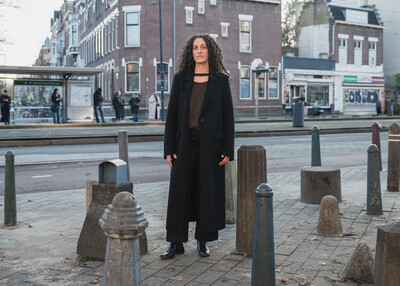
How can the biennale simultaneously be an exercise for critical systems analysis and for shared applied imaginaries?
Practices of design are more and more confronted with contemporary crises which emerge in situated and global contexts and which are often consequences of large dominant systems — systems which are themself designed. Across domains—from digital media to the natural environment— time accelerates, freedom in decision making is not for everybody, flows become difficult to grasp, and a pervasive sense of disorientation emerges.
In the context of the Netherlands design is a well integrated discipline in society, the field operates as a recognised actor and as an expanding field of practice. As a practitioner based here, it is a reality I witness daily both in pedagogical and practice settings. Rotterdam itself hosts a dense and diverse network of design practitioners, many of whom circulate internationally or are rooted locally while engaging transnationally. This constellation of voices actively engages in society while working across disciplines and scales, and negotiating the frictions between institutional frameworks and self-organized initiatives.
Simultaneously, design functions differently —sometimes as an imported model tied to the logic of global supply chains, or as an aftermath of dominant extractive frameworks. Other times it is not called design but simply is a way of life, rooted in embodied knowledge, everyday gestures and/or cross-generational labour. Across the globe, it is within activistism, communities, or NGO structures where institutions fall short. Design is not static, it is systemic. It moves. Yet it is un-even: small-scale practices often face precarity, or are made peripheral within systemic implementations while global actors consolidate power.
SYSTEMS OF SUPPORT is a title of both inspiration and urgency. Since the beginning it opened in me reflections on practices who are reorienting their values through critical engagement with standards, methods, materialities, and by experimentation with alternative modes of research, production, representation, circulation, and repair. As a multifaceted compass, it invites me to consider what shared responsibility is and invites connections across ecological, pedagogical, academic, and professional networks. These are questions that I carry myself, not only here, but as part of my work which approaches curation as a design practice in itself.
As a diverse team of curators we are engaging with the multifocal meanings of SYSTEMS OF SUPPORT spanning from practices that foreground ecology, attend to the invisible, and advocate for rights of equality and knowledge access. As curator of the cultural strategy, I like to imagine the Biennale as a multivocal worlding exercise where emerging and established practices are active and in relation to each other — moving from display to a spatial ecosystemic support system in itself.
With the professional and academic expertise of curators Wouter Veldhuis, Carola Hein, Saskia van Stein, and the IABR team, this journey is a shared inquiry, and as a process has already begun.
I look forward to the next steps, when soon participants will join the process!