Discover more than 50 international projects on the future of living, energy, water, and our living environment
From 18 September to 29 November 2026, the International Architecture Biennale Rotterdam (IABR) presents its 12th edition: SYSTEMS OF SUPPORT. For more than 20 years, the IABR has brought together designers, researchers, policymakers, knowledge institutions and residents to explore how design can contribute to the major challenges facing society today.
With SYSTEMS OF SUPPORT, the IABR focuses on the systems that make our daily lives possible, from water, energy and materials to housing and infrastructure. Many of these systems are under pressure. How can we transform them to make them not only more efficient, but also fairer, more resilient and fit for the future? And what role can architecture, urban design and landscape architecture play?
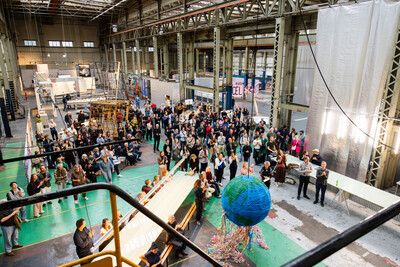
At the Piekfabriek at the former Hunter Douglas site in Rotterdam, the biennale brings together an exhibition, an extensive public program and collaborations with partners. For many years, this was a place of industry and production. Today, the former factory site is being transformed into a new place to live and work. This makes it a fitting location for SYSTEMS OF SUPPORT. The changes taking place here raise questions about housing, energy, materials, the surrounding neighborhood and what we carry forward from the past. The site itself makes the themes of the biennale visible.
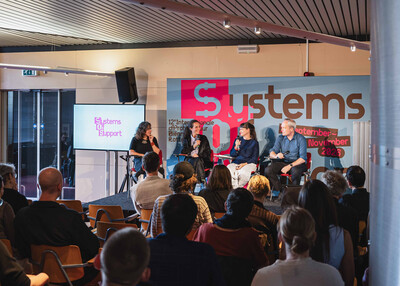
Opening IABR 2026 SYSTEMS OF SUPPORT. Image: Jacqueline Fuijkschot
Discover more than 50 projects from the Netherlands and abroad
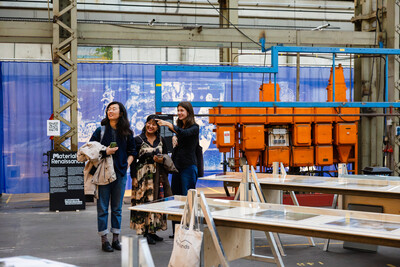
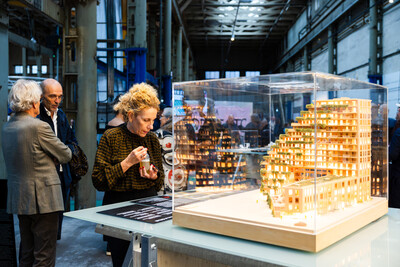
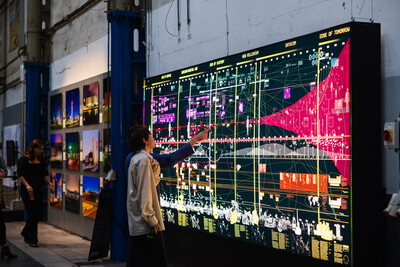
The exhibition is at the heart of SYSTEMS OF SUPPORT. More than 50 designs, research projects, installations, films and spatial presentations reveal how the systems behind water, energy, materials, housing and infrastructure shape our living environment. They show not only where these systems are failing, but above all how things can be done differently.
What new possibilities emerge when designers question and redesign existing systems? And what does this mean for how we live, build and coexist in the future? Discover it here.
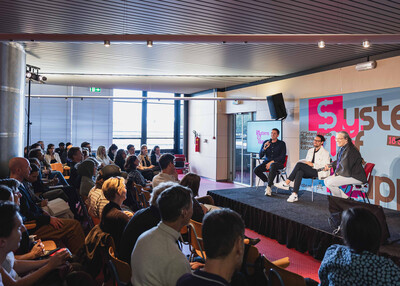
Throughout the biennale, the IABR presents an extensive public program for professionals, students and the wider public. From large symposia to small scale conversations and guided tours, each event offers a new perspective on the themes of SYSTEMS OF SUPPORT. Which event will you join?
The public program is being announced in phases. New events will be added to the program in the coming period.
Curious about the ideas behind the biennale? Or want to learn more about the societal questions at the heart of SYSTEMS OF SUPPORT? Our short introduction explains what the 12th edition of the IABR is about and introduces the key ideas behind the exhibition.
For a deeper dive, the curatorial statement provides more extensive background on the central ideas of the biennale. In it Carola Hein, Martina Muzi, Saskia van Stein and Wouter Veldhuis explain why today’s economic, ecological and social systems require fundamental change, what role architecture can play and why the IABR sees itself as a SYSTEM OF SUPPORT: a place where knowledge, exchange, experimentation and collaboration come together to develop new perspectives for the future.