2026 - 12th edition
SYSTEMS OF SUPPORT
It is a time in which everything seems to be shifting at once. What this will lead to remains uncertain. Climate change, geopolitical and social tensions, and increasing scarcity of space, resources, and energy are placing systems across the world under immense strain. Yet precisely in this friction, a new momentum is surfacing. As long-standing structures reach their limits, renewed appreciation grows for what is close to home: the strength of local communities, regionally integrated approaches, ecological balance, renewable resources, and cooperative systems that restore rather than exhaust.
The IABR 2026 SYSTEMS OF SUPPORT invites everyone to explore this movement – to think ahead together, and to imagine and build a future in which locality once again sets the course.
For centuries, progress was defined by scaling up. Companies stretched supply chains across continents, outsourced production, and relied on a global economy driven by speed, margins, growth, and volume. Today, that system is faltering. The shift to renewable energy, clean food production, fair resource distribution, wellbeing, and livable cities for all demands a radically different way of seeing and acting.
This requires companies and governments to reconnect with the regions where people live and work. Space, water, energy, and materials can no longer be treated as limitless commodities; they must be understood as interdependent parts of regenerative systems. This shift is not only technological or economic – it’s also social and cultural. It’s a reorientation of what societies value.
Design plays a central role in this transition. Architecture has always been about more than buildings; it’s about the relationships and systems that shape collective life. Too often, however, architecture has been reduced to a computational exercise or a real-estate product, subject to short-term logics.
The ambition of Systems of Support is to reposition architecture as a public force – one that creates space for shared values, enables alternative economic models, and forges new connections. Here, designers are not only solvers, but shapers: individuals who can unlock stalled systems and spark the imagination needed to move societies forward.
The 12th edition of the IABR explores how to build new economies. Which values should lead the transition away from a fossil-fuel-based, linear model? What opportunities arise from an economy rooted in regional contexts – one that reduces global risks and centers public interest? How might energy, water, food, infrastructure, and construction logistics together form a new foundation?
Crucially, how can designers help citizens, policymakers, and businesses understand, feel, and co-shape this shift? The biennale addresses these questions in tangible and accessible ways. Exhibitions, stories, prototypes, conversations, research, and tools reveal how design can contribute to an economy that generates value rather than depletes it – an economy that prioritizes public benefit, begins close to home, and reverberates outward.
Systems of Support exposes the infrastructures that shape life today – data flows, logistics networks, energy grids – and shows how the future becomes visible in everyday environments: open-source housing, water-holding landscapes, shorter and cleaner supply chains. The IABR works with designers, researchers, thinkers, students, knowledge institutions, and social partners from the Netherlands and beyond.
With the new master class, Money Talks, IABR activates designers and financial experts to explore how business models, material flows, ownership structures, and long-term investments can become part of tomorrow’s design toolkit. Design shapes the economy, and the economy shapes everyone – from port workers to tech developers, from farmers to city dwellers, and from policymakers to residents trying to understand the forces transforming their surroundings.
The biennale makes complex systems graspable by placing locality and connectivity at the forefront. It shows how daily choices intertwine with global dynamics. New systems can only function if people understand and can engage with them. Whether we consider the impact of drought on coffee prices, a stranded container ship disrupting world trade, or the material flows that shape cities, the message is clear: everyday life is embedded in global infrastructures – and design can help rebuild these systems on fairer, more balanced terms.
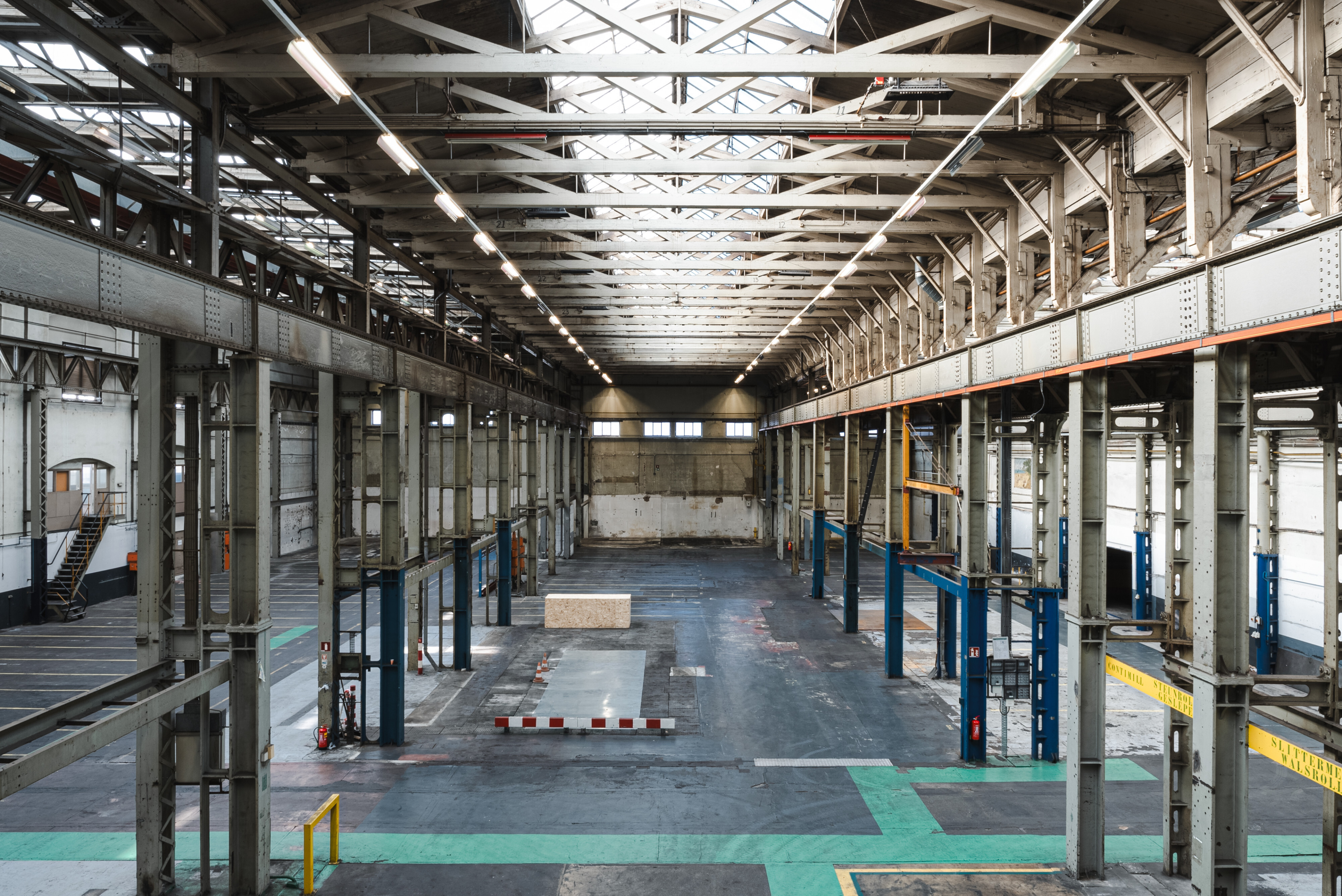
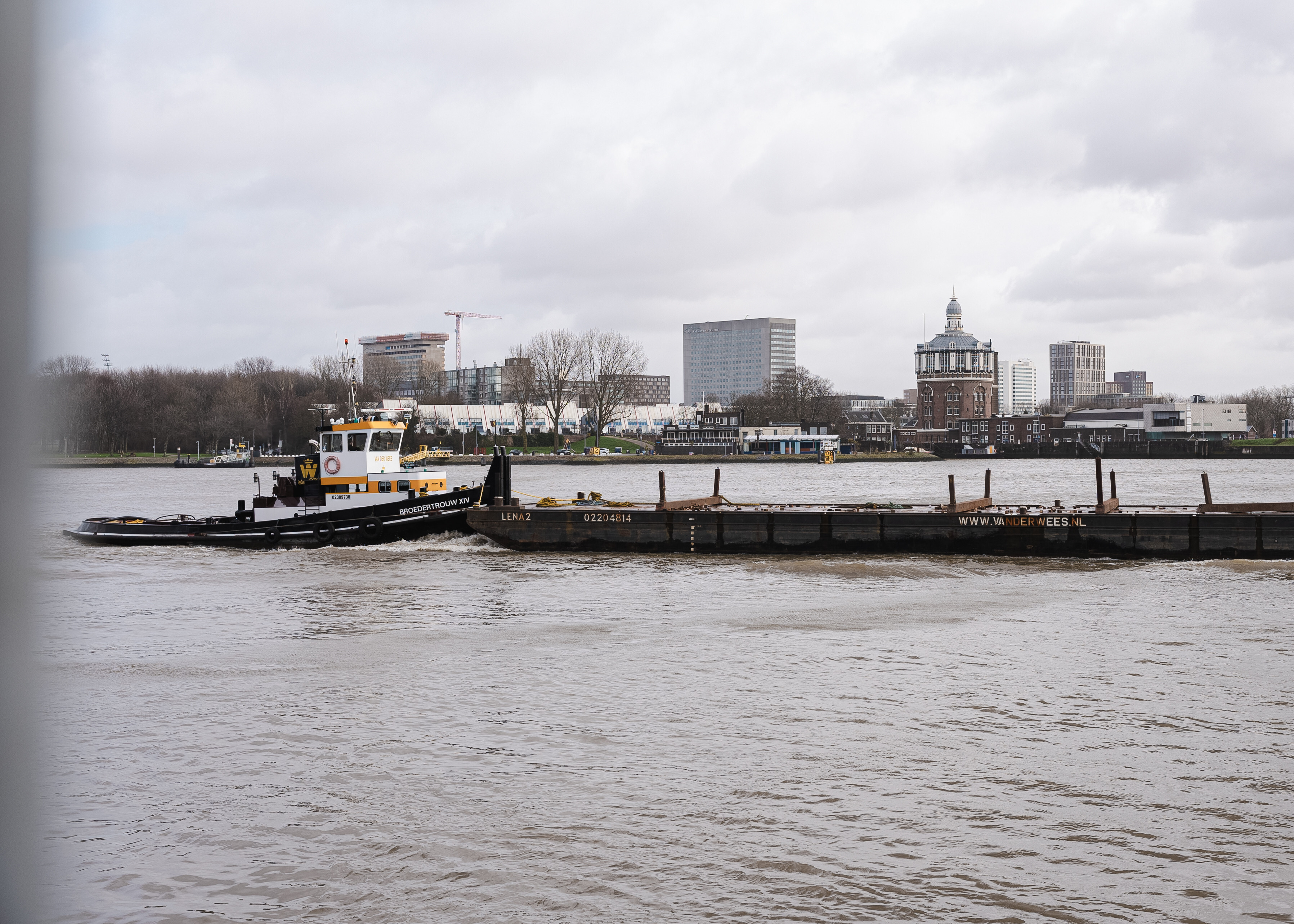
Beginning 17 September 2026, the IABR presents these explorations at a characteristic Rotterdam location where thinking, making, researching, and imagining come together. It is a place for experimentation, craft, resilience, and multiple forms of value creation. Here, a new perspective on tomorrow’s economy comes into view – rooted, fair, and regenerative. An economy that calls for action and draws near, in every sense.
Systems of Support invites us to move forward together – to see how the future takes shape when we reorganize economic systems, release old patterns, and rediscover design as a catalyst for collective transformative capacity. In this future, proximity becomes a force of connection rather than limitation. In this future, together we build a world that supports all forms of life.
The edition is curated by Wouter Veldhuis (former Dutch Government Advisor, architect, urban designer and co-founder of MUST) at the invitation of the IABR. He is joined by Carola Hein (professor of the history of architecture and urban design), and Martina Muzi (curator, designer, and educator).
Curators
-
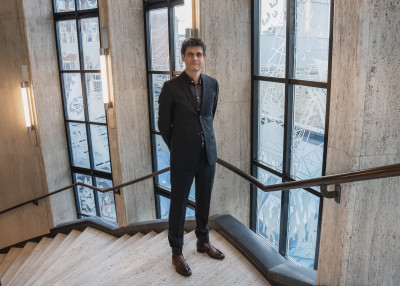
Wouter Veldhuis, head curator
Wouter Veldhuis is co-founder of MUST, an interdisciplinary design office with branches in Amsterdam and Cologne. Driven by a search for greater justice, he works strategically on reshaping spatial relations and letting go of outdated patterns that are no longer viable. Wouter uses design and imagination as powerful tools to expand society’s capacity to envision alternative futures—futures in which landscapes and communities can once again come into balance.
Between 2020 and 2025, Wouter served as the Chief Government Advisor on the Physical Living Environment (Rijksadviseur voor de Fysieke Leefomgeving). In this role, he focused on understanding the spatial consequences of long-term challenges at the intersection of ecology, sociology, and economics. Under the motto “The 22nd century starts now,” he and the team of the Board of Government Advisors demonstrated in multi-day Future Labs that many major transitions require immediate, concrete actions to achieve national goals. His work resulted in several advisory reports to the Dutch government on topics such as the future economy and spatial use, the energy transition, climate adaptation, and strengthening social and spatial structures in cities and villages. Examples include The Economy of the Future Begins in the Delta (2024), The Logistics of Tomorrow Starts Today (2023), and Building in the Neighborhood (2022).
In addition to his regular work, Wouter and Simon Franke have been engaged in a long-term exploration of the Just City. Interim findings have been published in Verkenning van de Rechtvaardige Stad: stedenbouw en de economisering van de ruimte (2018) and Onderweg naar de Rechtvaardige Stad: over nabijheid, vertrouwen, wederkerigheid en gemeenschapsvorming (2024). Based on these publications, Simon and Wouter—together with Jorn Konijn and Saskia Naafs—curated the successful exhibition De Rechtvaardige Stad at the Van Eesteren Museum in Amsterdam.
From 2012 to 2018, Wouter was Head of the Urbanism Master’s Programme at the Rotterdam Academy of Architecture. During this period, he strongly emphasized the social responsibility of urban designers and architects. The leading motto of the curriculum was Anchored Craftsmanship, giving students space to develop and apply their design skills within complex societal challenges. This included a long-term collaboration with Morgan State University in Baltimore.
As a member of the Amsterdam Council for Urban Development and the Stad-Forum, Wouter advised the City of Amsterdam from 2005 to 2020 on numerous spatial issues. As chair of the Stad-Forum, he initiated several major public programmes on the city’s future, such as the Week of Water (2013) and In de Ban van de Ring (2014). He was also responsible for the Masterplan Space for the Inner City (2017) and a three-year exploration of everyday life in the Amsterdam metropolitan region, published as Thuis is… zo vertrouwd dat het onzichtbaar is (2021).
Wouter currently serves as Chair of the EFL Foundation, an independent foundation dedicated on the one hand to preserving and managing the archives, copyrights, and intellectual legacy of Cornelis van Eesteren and Theodoor van Lohuizen, and on the other hand to stimulating the development of urbanism, planning, and landscape architecture through targeted grants. He is also a member of the advisory committee for funding concrete projects within the Utrecht Province programme Groen Groeit Mee.
With MUST, Wouter has realized numerous projects focusing mainly on inner-city transformation and densification. MUST continuously explores and defines emerging spatial and societal challenges. This began in 1998 with the organisation of Groundcontrol, a three-year programme for recently graduated urban designers and landscape architects across Europe, aimed at identifying contemporary social and spatial questions. Results were published in Euroscapes (2003). For many years, Wouter collaborated with Ivan Nio to bridge the gap between the planned renewal of Amsterdam’s Western Garden Cities and the lived experience of residents in these post-war neighborhoods. Findings were captured in the Atlas van de Westelijke Tuinsteden (2008) and Nieuw-West: Parkstad of Stadswijk (2016). He also conducted long-term research into the spatial quality of Dutch motorways (Atlas van de Snelwegomgeving) and was closely involved in exploring the spatial impact of Roman history in the Netherlands (Limes Atlas).
Wouter gained his first exhibition experience with his contribution to Hybrid Landscapes in the Dutch Pavilion at the Venice Architecture Biennale in 2004. He later contributed multiple times to the IABR, including a major design-research project on an inclusive and healthy Utrecht for IABR–2016: The Next Economy.
-
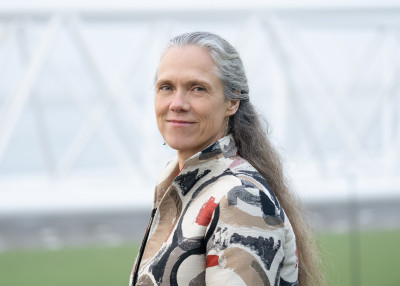
Carola Hein, curator
Professor and Head, Chair History of Architecture and Urban Planning at Faculty of Architecture & the Built Environment, Delft University of Technology. Professor of Water, Ports and Historic Cities at Erasmus University and Leiden University. UNESCO Chair Water, Ports and Historic Cities. Director Leiden-Delft-Erasmus (LDE) PortCityFutures Centre.
She has published widely in the field of architectural, urban and planning history and has tied historical analysis to contemporary development. She has received major grants, including from the Dutch NWO, from the Volkswagen Foundation and the European Union (Horizon, Interreg, etc.) Among other major grants, she received a Guggenheim Fellowship, an Alexander von Humboldt fellowship and a Volkswagen Foundation grant for mixed method digital humanities projects ArchiMediaL and Time Travel. Her many honours include the Sarton Medal in 2020, awarded to an outstanding scholar in the history of science. Her work focuses on long-term developments, multi-scalar and multi-stakeholder approaches. She advocates for culture-led and value based approaches. Her research has focused on capital cities, disaster and rebuilding, the transmission of architectural and urban ideas, the theme of water and heritage, port cities and the global architecture of oil.
In her edited book Port Cities: Dynamic Landscapes and Global Networks (Hein, 2011) she first proposed the concept of the spatial impact of port related flows on cities and territories, the PortCityScape. Over the next decade, she continued her work on commodity flows in port cities and territories, focusing on the importance of long-term development and path dependencies. The co-authored Port City Atlas: Mapping European Port City Territories: From Understanding to design (2023) establishes the concept of port city territories and explores 100 European port city territories through unified mapping.
Following her appointment as professor at Delft University of Technology in the Netherlands in 2014, she has combined her interest in port cities with the GIS-based research tradition of the Chair History of Architecture and Urban Planning. Her article ‘Oil Spaces: The Global Petroleumscape in the Rotterdam/The Hague Area’ (Hein, 2018) describes the close link between water and oil. Her edited book Oil Spaces: Exploring the Global Petroleumscape (Hein 2021) analyses the close link between shipping, water, oil and ports.
Her interest in water and heritage are evidenced through the edited volume Adaptive Strategies for Water Heritage (2020) and the co-edited book Urbanisation of Sea (Couling, Hein 2020). She also edited The Routledge Planning History Handbook (2018), which was awarded the 2018 IPHS Special Book Prize.
She serves as President of the International Planning History Society (IPHS) and is a former President of the Global Urban History Project. She serves as IPHS Editor for Planning Perspectives, as editor of the European Journal of Creative Practices in Cities and Landscapes and Asia book review editor for Journal of Urban History. She edits the Connexions section of Planning Perspectives, co-edits CPCL, and is editor in chief of the open access, peer-reviewed Blue Papers, a journal on water, culture, heritage and sustainable development.
Her (co-)edited books and monographs include: Hustle and Bustle of Port Cities (2025), Port City Atlas (2023), Oil Spaces (2021), Urbanisation of the Sea (2020), Adaptive Strategies for Water Heritage (2020), The Routledge Planning History Handbook (2018), Uzō Nishiyama, Reflections on Urban, Regional and National Space (2017), History, Urbanism, Resilience, Proceedings of the 2016 IPHS conference (2016), Port Cities: Dynamic Landscapes and Global Networks (2011), Brussels: Perspectives on a European Capital (2007), European Brussels. Whose capital? Whose city? (2006), The Capital of Europe. (2004), Rebuilding Urban Japan after 1945 (2003), and Cities, Autonomy and Decentralisation in Japan. (2006), Hauptstadt Berlin 1957-58 (1991).
-
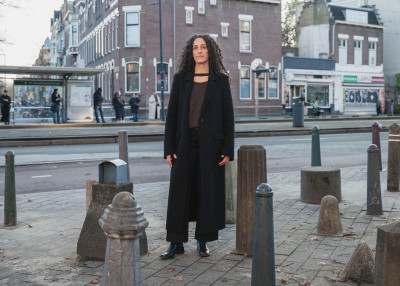
Martina Muzi, curator
Martina Muzi is a designer, curator, and educator. She investigates the role of design within the complex networks of material logistics, geopolitical cultures, and social structures, with a particular focus on how design practices reveal and question underlying systems. Her work has been presented internationally at the Venice Architecture Biennale, the Vitra Design Museum in Basel, the Istanbul Biennial, the MAAT Museum Lisbon, and the M+ Museum of Visual Culture in Hong Kong.
Martina is currently engaged as curator of Design Signals at FABER in Timișoara, Romania, a program dedicated to design research and practices. It invites designers to apply different media, techniques, skills and languages to explore the hidden narratives and the untapped resources within the Romanian industrial ecosystem. Since 2024 she has collaborated with MAXXI the National Museum of XXI Century Arts and Architecture in Rome where she curates the pluriennial project ENTRATE, a program which rethinks the entrance hall of the museum as a public place of interaction between the public and design through the work of invited design practitioners.
Muzi leads the BA programme Studio Technogeographies at Design Academy Eindhoven and serves as the curator of the GEO—DESIGN exhibitions platform at Van Abbemuseum, Eindhoven, now a digital platform, where design explores new perspectives on global and technological developments through contemporary thematics of investigation.