Mission
The International Architecture Biennale Rotterdam (IABR) is an independent cultural institution for knowledge and design that stimulates debate on how the societal challenges of our time translate into spatial challenges. Drawing on the disciplines of architecture, landscape architecture and urban design, IABR brings together designers, policymakers, researchers and the wider public to develop new perspectives on the challenges of today and tomorrow.
Climate change, the energy transition, housing, water safety, food security, heat stress and a healthy living environment are ultimately all spatial challenges. Designers help to make these complex challenges tangible, envision possible alternatives and demonstrate how change can take shape. Design research is an important instrument and methodology for developing new insights and identifying pathways for action.
Since its first edition in 2003, IABR has demonstrated how design and design research can contribute to societal change. Central to this is the development of a healthy, just and resilient living environment, in balance with people, nature and other ecosystems.
Every two years, IABR organises an international biennale featuring exhibitions, debates, lectures, workshops, guided tours and other public activities. It provides a setting in which design, research and society come together, creating new ideas, collaborations and pathways for action.
In addition, IABR is active in design research, knowledge development, talent development and collaboration, and stimulates public debate on issues such as CO2 emissions, planetary boundaries, the circular economy and bio-based materials. In this way, IABR plays an agenda-setting, connecting and catalytic role within architectural discourse in the Netherlands and internationally.
Biennale
The biennale, held every two years, lies at the heart of IABR. For each edition, IABR appoints one or more curators to develop a substantive and artistic programme around an overarching theme.
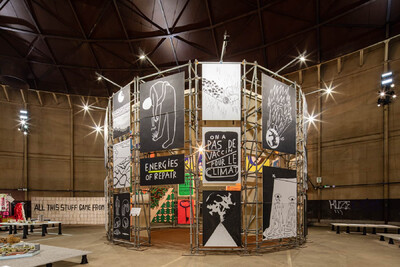
The exhibition brings together design research, realised projects, best practices and inspiring examples. It demonstrates how design can contribute to both understanding and addressing the spatial challenges of our time.
The exhibition is more than a presentation. It is a place for knowledge exchange, encounters, debate and dialogue, where professionals, policymakers, designers and the wider public engage in conversation about the living environment of tomorrow.
Design Research
Design research is at the heart of IABR. IABR initiates, supports and facilitates long-term research programmes in which designers, public authorities, knowledge institutions, civil society organisations and residents work together on current spatial challenges. By using design as a research methodology, these programmes generate new insights and concrete solutions to the societal challenges of today and tomorrow.
Alongside these collaborative research programmes, IABR provides space for theoretical and experimental research by individual designers and researchers, known as Agents of Change. IABR also works closely with educational institutions to connect knowledge development with talent development. The insights and outcomes of these diverse research trajectories come together during the biennale, where they are shared with professionals, policymakers and the wider public.
Debate
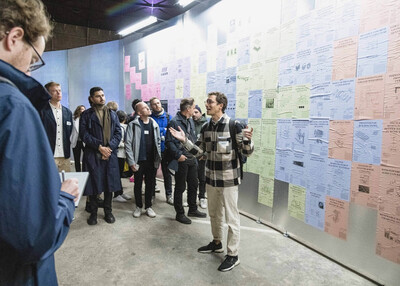
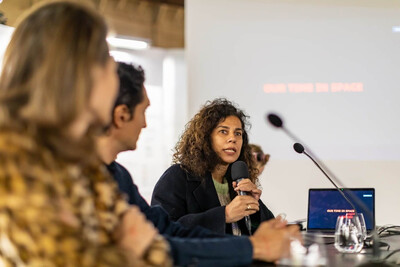
IABR fosters public engagement and debate on the spatial challenges of our time. Through conferences, lectures, debates, films, publications, workshops and masterclasses, IABR brings together designers, researchers, policymakers, civil society organisations and the wider public to exchange knowledge, share perspectives and develop new insights.
These activities take place throughout the year and come together during the biennale in an extensive public programme. By creating space for reflection, encounter and dialogue, IABR continues to place current societal developments on the agenda. The insights that emerge from these exchanges feed into IABR’s design research and inform the content of future biennales.