Elise van Herwaarden about Money Talks
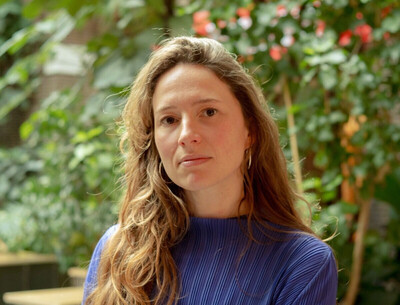
How can designers create social value in a world where financial systems increasingly determine what we build?
The major spatial challenges of our time call for new ways of collaborating, financing and designing. Yet many decisions continue to be driven by existing economic models, investment logic and short term returns. That is why, as part of the 12th edition of the biennale, the IABR is organising the live masterclass Money Talks on 7 October. The webinar will be moderated by Elise van Herwaarden. We asked her a few questions to shed light on the concept of Money Talks.
How do you see the relationship between money and financial systems on the one hand, and design and architecture on the other?
At the moment, money largely determines how much room there is for good design. While a required rate of return or financing condition may initially seem like a purely financial consideration, it has consequences for what a designer can do. I would also like to add that both the financial parameters and the freedom of design are influenced by a third dimension: policy, legislation, and regulations. Consequently, the relationship between financial systems and design cannot really be viewed in isolation from this.
At the same time, a design needs to bring many different aspects together: for example, the interests of future residents and users, the sustainable use of materials, and a contribution to a future proof street, neighbourhood or city.
In my experience, financial institutions and designers still often work from their own perspectives, even though they share many interests, such as a resilient society and a sustainable future. By gaining a better understanding of the principles and considerations that shape the other field, more room emerges to work from these shared values.
You trained as a designer. Where does your fascination with monetary systems and spatial development come from?
I grew up in a VINEX neighbourhood in the polder. The meadows around us gradually transformed into residential areas, where children were born and new communities emerged. That is probably where my fascination with our ability to shape our surroundings began, and what led me to study architecture and the built environment.
For my graduation project, I explored how architecture can respond to sea level rise. Afterwards, I also wanted to contribute in practice to creating a more sustainable and adaptive living environment. I started looking more closely at the systems behind the built environment because I wanted to understand where I could have the greatest positive impact. That search eventually led me to work as a sustainability manager for an institutional real estate investor.
What does a future based on social values rather than money look like?
I am not actually sure that social values and money necessarily have to be at odds with each other. After all, money is also used to express value.
The problem, in my view, is that not all forms of social value are translated into financial value equally or fairly. As a result, some forms of value become less visible in economic terms, while others receive a great deal of attention.
Strong social cohesion, a building made from locally sourced materials, or greening neighbourhoods that experience significant heat stress are all highly valuable to society. Yet this value is not always reflected in euros on the balance sheet of the entity making the decision.
A future based on social values requires these values to be taken into account in the choices we make. If decisions are genuinely approached from a societal perspective, this can contribute to less inequality, greater climate justice, and more. The question remains, however, how we determine what is valuable and how different forms of value should be weighed against one another.
How do you see your role as moderator of Money Talks?
I am very pleased with this initiative, because I believe it is important to build a bridge between the financial world and the world of design. I see my role as helping these worlds open up to one another and supporting the exploration of common ground and shared interests.
Having worked in both worlds, I am aware of the assumptions and preconceptions that exist on both sides. At the same time, there are many opportunities to learn from one another and make use of each other's strengths.
For designers, it is extremely valuable to understand how financial regulations or required rates of return relate to the frameworks within which they work. If you understand where the requirements in a programme of requirements come from, you are better equipped to discuss them and explore where there is room for manoeuvre.
A valuable next step, in my view, would be to also bring ‘finance people’ into the world of designers and let them experience what a different way of thinking can add.