Shifting Grounds
Designing for different values
During Shifting Grounds, international and Rotterdam-based architects, designers, researchers, writers and other spatial thinkers come together for two days of conversations, project visits and knowledge exchange. Drawing on different perspectives, they explore how cities are changing and the role that design disciplines can play in these transformations. You can also join this conversation.
Dominique Petit-Frère, architect, artist and co-founder of Limbo Accra, works at the intersection of architecture, art and urban transformation in Accra, Ghana. Hélène Joos, architect and partner at AgwA, works on a wide range of architectural projects, including the transformation and adaptive reuse of existing buildings.
Drawing on their different contexts, they will discuss how cities are changing and the role that architecture and design can play in this process. What do we mean by progress? What values underpin the way we develop our cities? And what can we learn when we look at our own urban context from a different cultural perspective?
Moderated by by Ali T. As’ad.
Admission to the event costs €12,50 (a ticket for the lecture also grants access to the exhibition).
The language of the event is English.
Shifting Grounds is a two-day international programme as part of IABR 2026 SYSTEMS OF SUPPORT.
Program
16:00 | Doors open
16:30 | Opening by Ali T. As’ad
16:40 | Talk by Dominique Petit-Frère
17:00 | Talk by Hélène Joos
17:20 | Moderated conversation
17:50 | Audience Q&A and closing
18:00 | End
Speakers
-

Dominique Petit-Frère Dominique Petit-Frère
Dominique Petit-Frère is the co-founder of architectural research practice Limbo Accra and Founder and Director of Limbo Museum, a contemporary arts and architecture institution in Accra, Ghana, dedicated to art, architecture, and design in West Africa. Her work investigates unfinished architecture, adaptive reuse, and the possibilities of institutional transformation, bridging architecture, contemporary art, and cultural practice to explore new models for architecture and the production of knowledge across African and diasporic contexts.
-
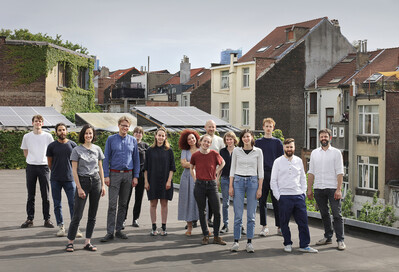
AgwA. Image: Filip Dujardin Hélène Joos
AgwA, based in Brussels and established between 2003 and 2006, mainly addresses projects for the public and for collective entities, focusing on adaptive reuse, complex situations, mixed-use developments, and tight budgets. Their designs anticipate a building’s long-term evolution, adapting to changes in use and context. While creating remarkable spatial dispositions, AgwA proposes a functional and clear architecture, emphasizing simple construction materials and structure.
AgwA contributes to academic research and education at different universities, notably founding the Architecture in Practice research group and publishing the “In Practice” book series since 2018, working with institutions like KU Leuven, ULB and ULiège.
-
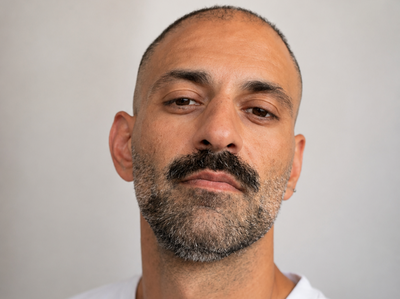
Ali T. As'ad Ali T. As'ad (moderator)
Ali T. As’ad is a researcher, architect, and editor based in Amsterdam. Across research, architecture, curating, publishing, and pedagogy, his multi-disciplinary work approaches architecture as a cultural and political practice extending beyond physical construct, and curating as a form of spatial inquiry and infrastructural negotiation. Ali is Editor-in-Chief of MAKAN: Journal of Culture & Space, a trilingual print journal critically engaging contemporary architecture, urban conditions, and artistic research across the SWANA region. He is also co-founder of the Spatial Justice for Palestine Network NL, a Netherlands-based collective of architects, researchers, and educators advancing critical spatial knowledge on Palestine through research, pedagogy, and public programming in the Netherlands. Ali is also a PhD candidate at the Amsterdam School for Cultural Analysis (ASCA), University of Amsterdam, where his research examines exhibition-making and museum practices in Palestine, with particular attention to how curatorial and exhibitionary practices operate under conditions of colonial fragmentation and contested sovereignty.