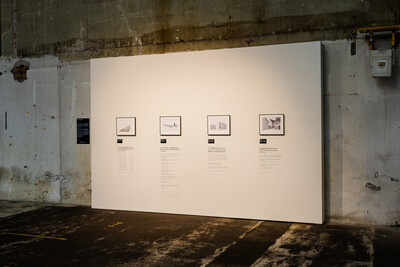
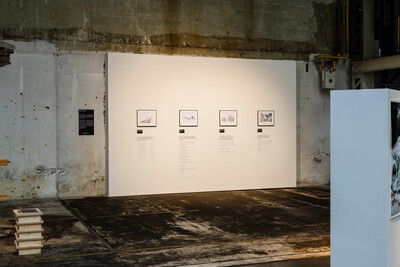
Some Regret by Karim Jaspers
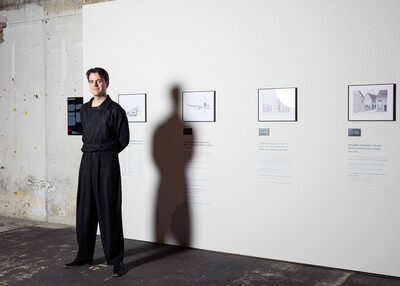
As spatial designers, we have spent years drawing the future, but no line we draw stays within the boundaries of the paper. A wind turbine, for instance, also implies extraction landscapes scattered across the world. These are part of the global value chains of critical raw materials (CRMs), essential minerals for the energy transition and digitalisation, whose extraction often comes at considerable ecological and social cost.
In Some Regret, we investigate the spatial implications of Europe's ambitions for critical raw materials, as defined by the Critical Raw Materials Act (CRMA): mining, refining, dependency and waste. Through meticulous hand drawings in ballpoint pen, we make the often invisible geographies and consequences of these ambitions tangible.
The title Some Regret reflects the uncomfortable reality that every decision in shaping our future involves trade-offs and unintended consequences. As spatial designers, we can contribute to Europe's strategic autonomy, but every choice carries negative consequences. Can we steer towards a future that we confidently call 'desirable', or is every choice a some-regret measure?
About Karim Jaspers
Karim Jaspers is an architect, researcher and artist. As an architect, Karim navigates the balance between the traditions of craftsmanship and the complexity of our hypermodern society. He composes across different scales, from the city to the finest detail. As a researcher, he observes without judgment, analyses complexity, and interprets from different perspectives. His research is invariably concerned with spatial planning, however, he seeks to connect this field with other domains of knowledge, such as artificial intelligence, systems thinking, critical raw materials, and psychology. As an artist, Karim explores different ways of imagining and representing the world. His primary interest lies in the overarching question of how the endless innovations of digitalised technology can be reconciled with our ecological boundaries and the world of human culture. He observes, philosophises, and imagines. He is drawn to composition, drawing and experience, experimenting with materials, and understanding human perception.