Interview with Erna Truijens of Sportspullenbank: “Sport creates a strong social system”
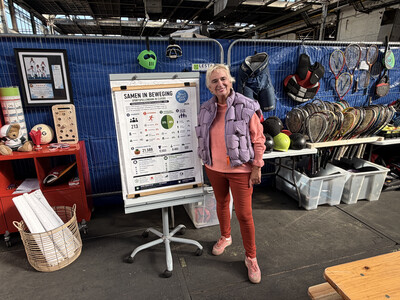
What started as collecting sports equipment for children who could not afford it themselves has grown into a broader mission. For Erna Truijens of Sportspullenbank, it has long since ceased to be just about football boots, boxing gloves or tennis balls. It is about how we organise our city. Because if we want more people in Rotterdam to be able to participate in sports, she believes we need to look at the entire system surrounding them.
How did Sportspullenbank come about?
“In some neighbourhoods, people simply participate in sports much less. So the question is: how do you create the conditions, from the ground up, for people to be able to participate in sports throughout the city?”
According to Erna, this starts with understanding what is happening within a neighbourhood. Among other roles, she served on the board of Speelcentrum Weena, where she saw how important the period after primary school can be. “Up until the end of primary school, you often still have a fairly good idea of what is going on in children’s lives. After that, they enter a very different phase. We see a lot of young people dropping out between the ages of 13 and 17. If there are few facilities and activities available in their neighbourhood, they are more likely to end up spending their time on the streets. A child’s living environment is incredibly important. If you want to reach children, you also need to involve their parents. Schools are stretched to capacity and teachers cannot solve everything. That is why a strong social foundation within the neighbourhood is so important.”
According to Erna, sport is an important part of that foundation. Not only because physical activity is healthy, but because sport provides children and young people with structure, social connections and a place within their neighbourhood. Investing in sport therefore also relates to broader societal challenges, including health, obesity, wellbeing and crime.
Where do you think the current system falls short?
“A lot of initiatives are organised through project-based funding. You can spend two years building something up, and then the funding ends. Everything comes to a halt again. We are constantly applying band-aid solutions.”
Sportspullenbank is part of a larger ecosystem of sports clubs, welfare organisations, schools, neighbourhood initiatives, parents and residents. When this ecosystem functions well, it generates social benefits in multiple areas. More people are able to participate in sports, children have a place within their neighbourhood, and preventative action can be taken to improve health, wellbeing and social safety.
“That is what we advocate for: redirecting funding streams and organising things differently. Investing more in the social foundation.”
What does this approach look like at Sportspullenbank itself?
Trust is a key principle. Anyone who needs sports equipment does not first have to provide extensive proof that they are entitled to it. “I don’t check. We work on the basis of trust.”
This low-threshold approach also requires an accessible location in the city. Over the past six years, Sportspullenbank has moved six times. The organisation is currently based in the Piekfabriek, which is also the venue for SYSTEMS OF SUPPORT.
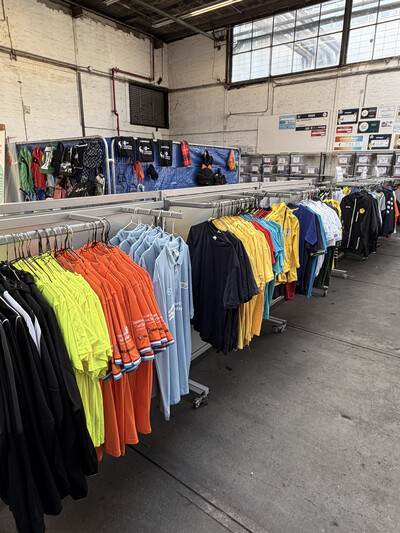
Bring your unused sports equipment when visiting SYSTEMS OF SUPPORT
Sportspullenbank is particularly in need of boxing equipment, football boots, good-quality sports shoes and all kinds of balls. Other items are, of course, always welcome too. Sportspullenbank is open on Mondays, Tuesdays and Wednesdays from 10:00 to 13:00. Appointments can also be made for other times.
This way, you too can contribute to a System of Support right in the heart of Rotterdam.