Erase to Replace by Saja Amro and Nama‘a Qudah
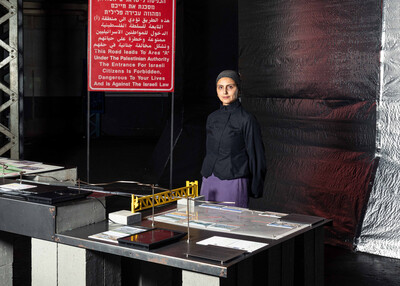
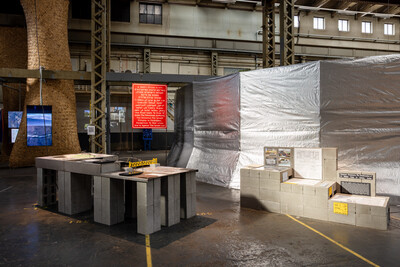
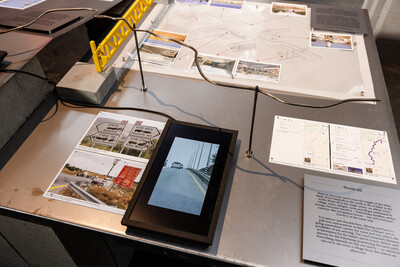
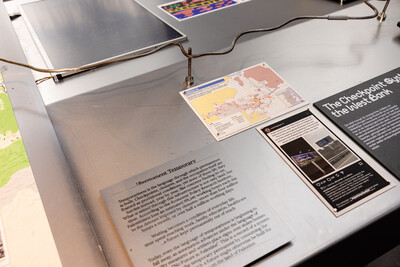
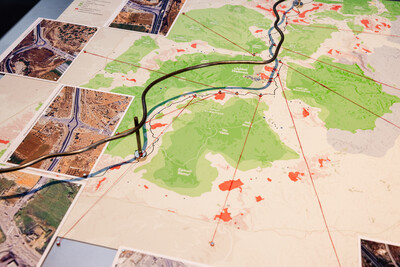
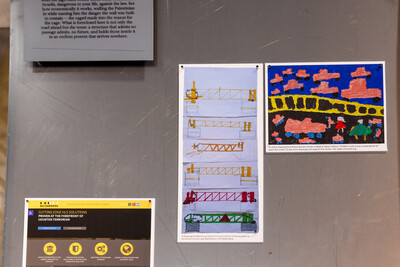
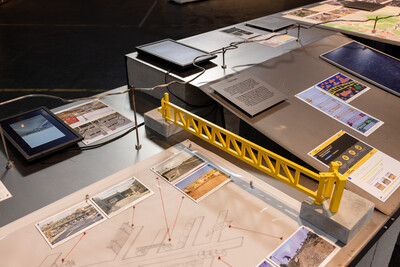
Architecture of Suspended Time explores how architecture and spatial planning shape the daily lives of Palestinians. Focusing on the checkpoint system around Highway 60 in Hebron and the signs marking the boundaries of Area A in the West Bank, the work examines an expanding network of roads, checkpoints, gates, closures, and territorial divisions governing Palestinian movement. The research traces how infrastructures presented as security mechanisms operate through blockage, delay, detour, and uncertainty.
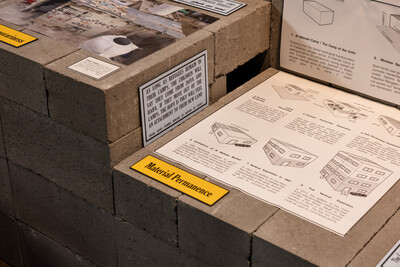
The work shares the space with Nama'a Qudah’s Temporary Permanence: The Transformation of Al Wehdat Camp in Amman, Jordan, which illuminates the camp’s multilayered realities and the enduring tensions between the permanent and the temporary. Together, the projects reveal how spatial structures and territorial divisions shape where people can go, which essential services they can access, and where they feel at home.
The work forms part of Erase to Replace, a research project exploring the relationship between space, power, and injustice. Saja Amro and Nama‘a Qudah take Palestine as their starting point and show that architecture and spatial planning are never entirely neutral. Spatial decisions separate people, restrict freedom of movement, and control territories. The project invites architects, designers, and students to critically examine their own discipline and position. How do their choices affect the daily lives of others? Who benefits from the way we shape space, and who bears the consequences?
Saja Amro is an architect, educator, and artist whose work focuses on education, space, and justice. She teaches at the Gerrit Rietveld Academie and the Academy of Architecture in Amsterdam and co-founded several collectives centred on alternative forms of education and spatial justice.
Nama‘a Qudah is an interdisciplinary researcher and educator who earned her PhD in architecture from TU Delft in 2024. Her research focuses on displacement and Palestinian refugee camps and explores the relationship between space, power, and everyday life.
Amro and Qudah are both involved in the Spatial Justice for Palestine Network NL, a network of architects, researchers, and educators that critically examines the role of architecture and spatial planning in Palestine.