As green as flax
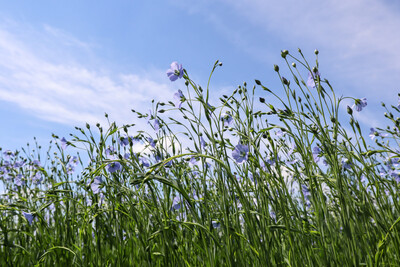
The fields around Rhoon bloomed blue until the 1970s. Flax provided many jobs in the Dutch textile industry. The rise of plastics in the 1960s came at the expense of many of the technical applications of linen. On top of that came cheap cotton and competition from low-wage countries. As a result, textiles disappeared from our country and flax virtually disappeared from the fields.
For the past 5 years, flax has been back in the Buijtenland van Rhoon and the polders turn as green as flax from April until the longest day. Then the flax starts to bloom. Fortunately, not all flowers bloom at the same time. For a week or two, lilac-blue dots keep coming and going. And the polders of Rhoon turn blue in the morning for two weeks. Flax blooms from sunrise until about 11 o'clock. Picking starts in August.
Flax is a nature-friendly, sustainable crop and good for biodiversity with unexpected and many possibilities. Discover it in the Buijtenland van Rhoon during a walk with area manager Arjan Ponsen. You walk across a beautiful piece of cultural-historical polder landscape just 10 kilometers from Rotterdam. Nowhere in the Netherlands is being experimented with 'nature-inclusive farming' on such a large scale.
Come by bike or take the metro to the Buijtenland van Rhoon.
The spoken language is Dutch.
A ticket is € 9,20.
Meeting point on the square in front of the farm shop.
Buijtenland van Rhoon. Photo: Zorgboerderij De Buytenhof