Atelier Rotterdam III
Energy Transition as Leverage for Socially Inclusive City Making
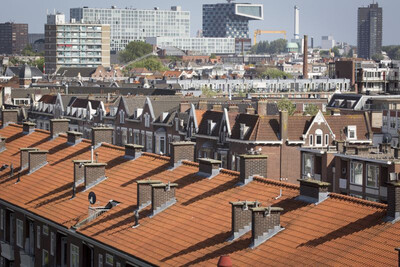
The IABR–Atelier Rotterdam used the energy transition as a driver for inclusive urban development as well as for other important challenges. Examples are food, the productive city, housing, and social justice. This way the energy transition is not only a goal, but also a means – a lever that can be consciously used to work on an attractive future, and a resilient and inclusive Rotterdam.
In the 2017-2020 period, Atelier Rotterdam conducted research by design in different ways and at different levels to explore the possibilities of the energy transition for the city. In the context of the Architecture Biennale 2018, it developed new building typologies for the energy transition. At the M4H+ test site, the Atelier explored the possibilities of circular economy and integrated area development, and in 2019 and 2020, the Atelier worked on the development of a Local Energy Action Plan for the Bospolder-Tussendijken district.
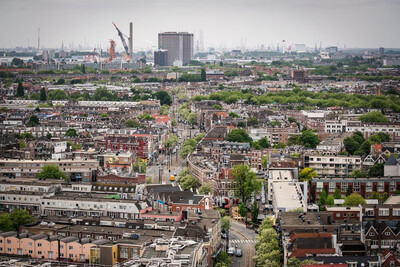
Rotterdam will switch to renewable energy in the coming years, district by district. The energy transition will be accompanied by the biggest renovation of the city since its postwar reconstruction. But many urban districts are also facing other problems, ones that residents consider more pressing. Vulnerable districts consider housing shortages, unemployment, high school dropout rates, debt, and street safety to be more pressing than the energy transition.
The energy transition is therefore not only a technical challenge, but also a spatial and social one. The transition to a sustainable energy system affects all facets of daily life: from the way people move around, to more energy-efficient homes and energy-producing districts. The energy transition is not taking place on a level playing field: for residents of vulnerable districts, the energy transition does not necessarily mean progress. But the right approach can ensure that citizens have something to gain, that they will become energy producers as well as energy consumers.
In 2018, Rotterdam’s city council designated Bospolder-Tussendijken as one of the districts eligible for a ‘coherent sustainable area approach’. In the coming years, plans are being made to make the district natural gas-free. But BoTu is also a ‘vulnerable’ neighborhood that faces pressing sociocivic problems.
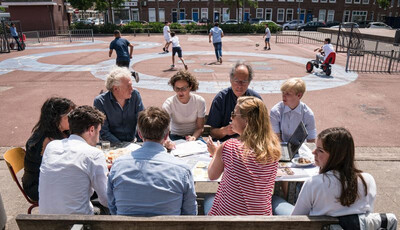
Atelier Rotterdam has been working on the Energy Neighborhood concept since 2019. Together with local stakeholders, the IABR Atelier is exploring how the energy transition can contribute to BoTu’s development into a more inclusive and resilient district. The aim is to collaborate with all partners to develop a working model that can be applied in other districts and more widely, including outside of Rotterdam.