Lada Hršak - Bureau LADA reflects on the scenography of SYSTEMS OF SUPPORT
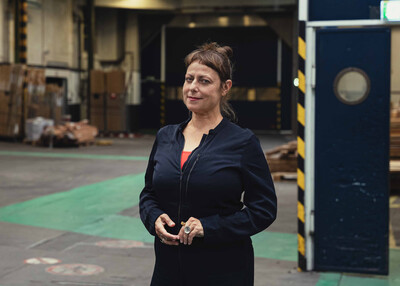
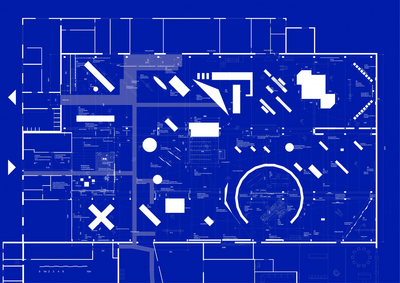
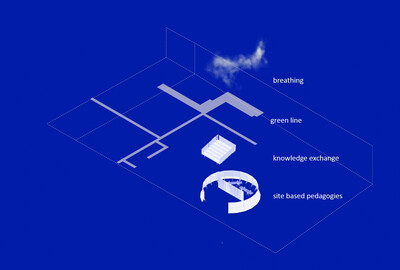
Amidst a recent site visit, one of the last remaining Hunter Douglas employees having worked there for over forty years, leads the way through the future exhibition hall. The space is vast, empty and open, yet he walks carefully, following the green lines on the floor allocated for safe passage between the machines. The machines are actually not there anymore; they are all auctioned off leaving only ghostlike presence. Yet, the body remembers them. In this brief liminal moment before the site is fully vacated, an overlap emerges that allows for a multiplicity of times to coexist. At the brink of the withdrawal of the former factory and the worlding of new iterations for the territory, the scenography draws on embodied memory as spatial knowledge. This mode of observation - repeated looking and understanding the location - becomes both method and position, defining the driving elements of this scenography.
Scenography catalyzes spatial experience within a compressed period of time. Creating a multi-sensory environment where works and actors - visitors, processes and spatial features - briefly coexist. Simultaneously, the scenography forms the backdrop that holds a variety of relations, connecting the environmental with the political, the social with the material. The notion of systems interconnection, as well as the notion of support, resonates very much within this performative framing of space and time.
From a pedagogical and professional lens, scenography arranges social processes in space, making it a form of architecture with strong performative potential. This biennale foregrounds (social) interconnectivity, where values are relational, reciprocal and continuously redefined. Developed through an iterative collaboration between the IABR, the curatorial team and the graphic and spatial designers, the process focuses on being with the site and gathering intelligence through multiple lenses. For us, as researchers, architects and scenographers, observing, listening and translating ideas into spatial relations is both humbling and energizing. While the selection of works is yet to be made, the urgency to engage within politically and socially fractured contexts remains, positioning scenography as a performative catalyst within the politics of space.
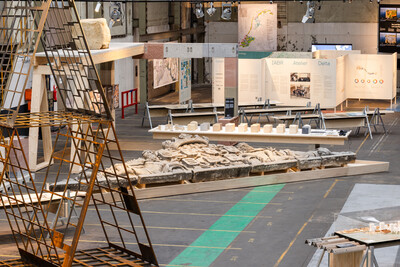
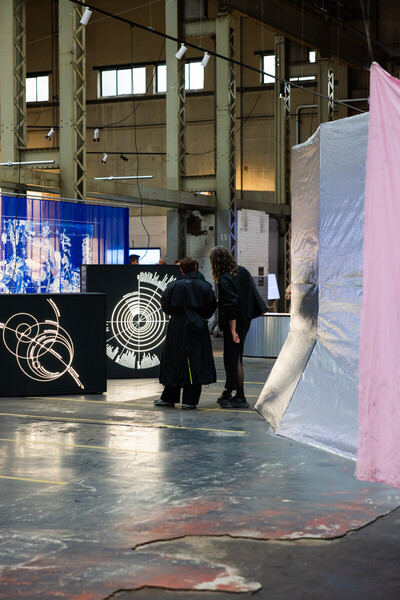
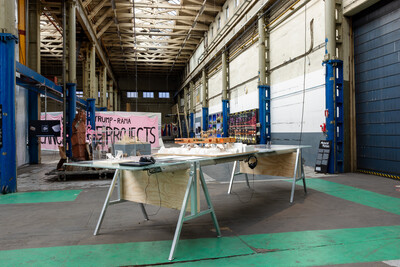
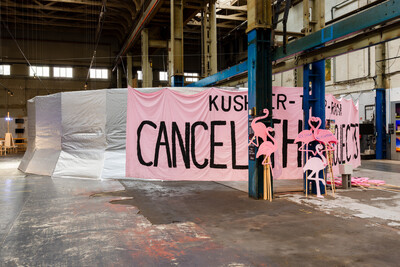
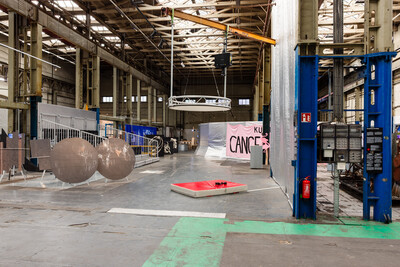
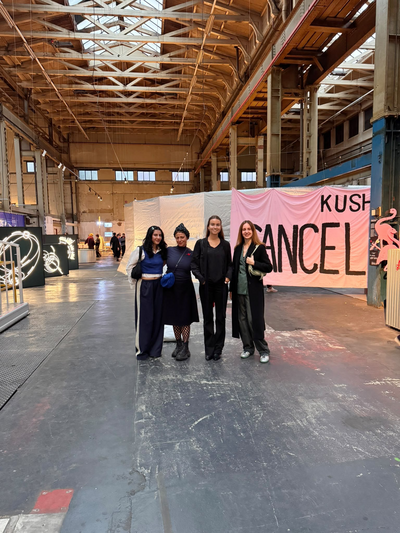
Current times of disheartening geopolitics (Gaza, Lebanon, Iran, Sudan, Ukraine), with the dismantling of ideologies, law and values make the urgency to engage, resist and envisage new value systems and relations ever more present. Demystifying the perceived inevitability of large-scale systems forms part of the spatial task. The 12th biennale SYSTEMS OF SUPPORT proposes to engage spatial professionals, designers, local actors and citizens. Situating the biennale within Rotterdam’s neighborhood of Feijenoord, drawing from the site as method, opens reflections on interconnected systems, spatial processes, policies and imaginaries.
In this sense, scenography is also a proposition: how to connect to the site within the complexities of contemporary spatial and political injustice, while holding space for reflection, exchange and dissent. How can the spatial setting support the works and practices it brings together as active agents within a shared environment? And how might it create conditions where visitors are not merely spectators, but participants in imagining and negotiating alternative spatial futures—allowing the opportunity to think and imagine otherwise?
Lada Hršak is an architect, researcher, and founder of Bureau LADA (Landscape, Architecture, Design, Action), a cross-disciplinary collective working between Amsterdam (The Netherlands), Zagreb (Croatia), Cairo (Egypt), and Tangier (Marocco). Framing itself as a feminine spatial practice, the studio engages with spatial justice, social ecology, and inclusive design through projects in architecture, research, and education. The designteam for the IABR scenography includes Natali Aguirre Montaña, Ema Dabrović, Lada Hršak,Luna Mayer and Katarina Pedišić.
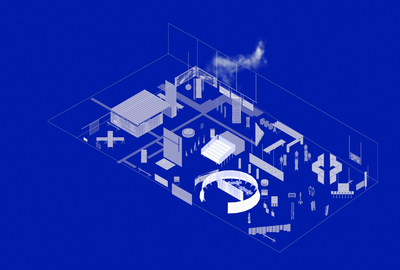
Overview exhibition in SYSTEMS OF SUPPORT