The High Ground
In 2020, it will be 600 years since Dordrecht was hit by perhaps the greatest aquatic disaster in the history of the Low Countries: the St Elizabeth’s flood. Since then, the city has been an island and it is still vulnerable to flooding today. Water safety is therefore its top priority.
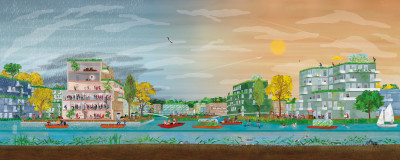
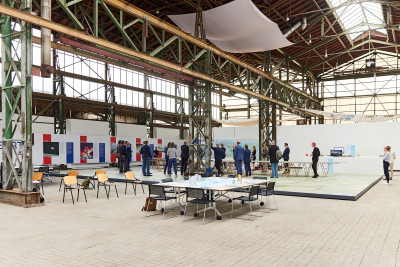
The exhibition ‘The High Ground’ shows how Dordrecht can increase water safety while building housing and stimulating employment, optimizing connections in the city and with the region, and increasing the quality of life and recreational opportunities for residents. The High Ground was part of the IABR 2020: Down to Earth.
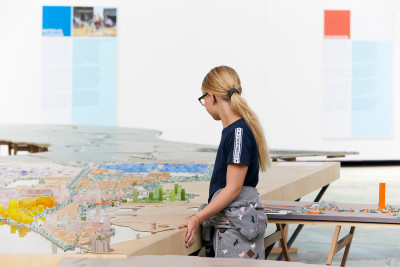
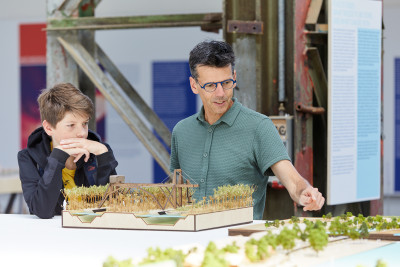
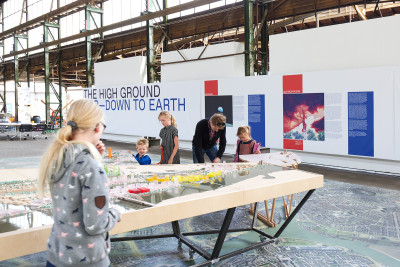
Led by Adriaan Geuze (West 8), the IABR–Atelier Dordrecht spent two years investigating how the need for self-sufficiency in the event of a major flood could be used to meet the current sustainable urban development challenge, that is, how water safety could be used as a lever.
Carried out by VenhoevenCS, PosadMaxwan, EGM architects, Studio Donna van Milligen Bielke and West 8, Atelier Dordrecht’s five sub-studies show that De Staart – currently an isolated area with many problems and little perspective – can play an important role in the realization of Dordrecht's water safety agenda.
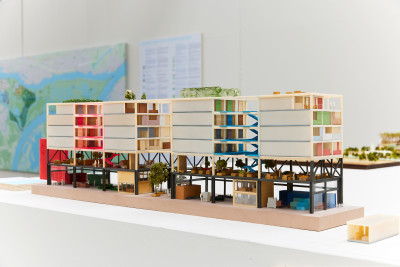
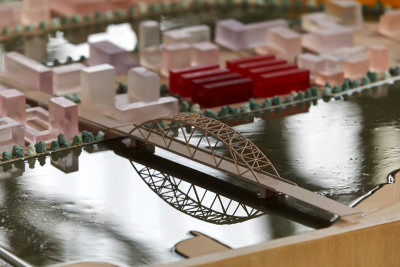
Choosing sustainable and inclusive urban development with water safety as a starting point will create opportunities, since this approach requires that flexible public space be available on De Staart at all times so that the extra square meters needed for peak shelter during a disaster can be quickly realized. Addressing the issue of additional space for evacuation shelters and other emergency facilities in the design process can result in a city where people not only live and work, but where there is also space for recreation, education, and other public facilities. This can be achieved by taking a different approach, to both buildings and outdoor spaces.
This leverage approach – where adaptations related to water safety help an area move forward – requires that De Staart always be easily and quickly accessible. This entails new, good connections in and with the city, and between the city and the region, which will also create good access to green spaces and water. The Wantij can be designed as a tidal park. This will have a positive impact on nature, increase recreational opportunities for the city and the region, and improve the quality of life on De Staart. Living on the water, in and with space for nature, will become a serious option.