Research

New Ecological Order: Influence of the European Energy Transition on North Africa

Agent of Change – Lesia Topolnyk

2023 – 2026

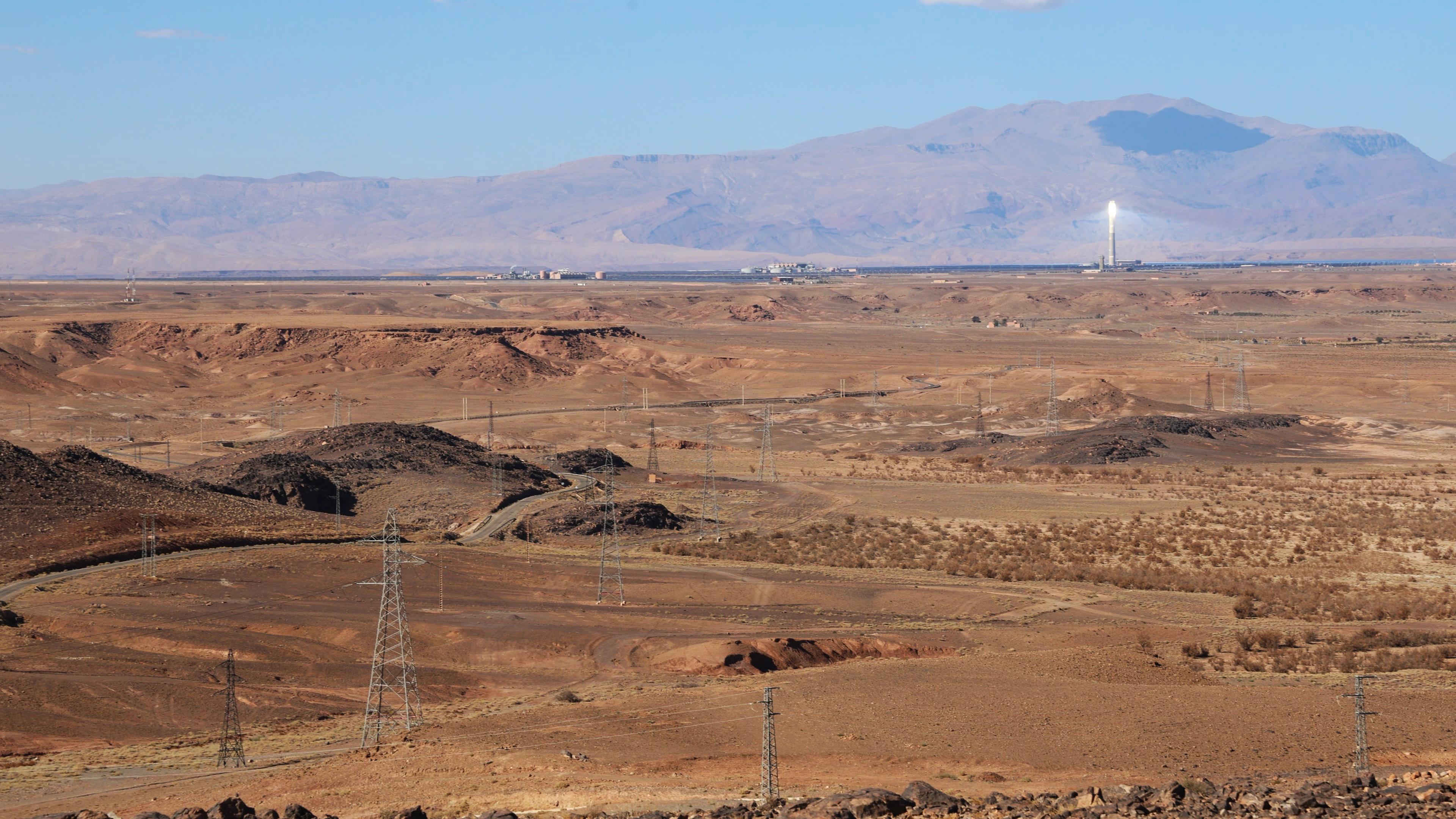
This research project critically examines the socio-spatial, environmental, and political impacts of large-scale renewable energy infrastructures in Morocco, with a particular focus on projects driven by European interests. While Morocco is frequently presented as a success story of the global green energy transition, the project questions this narrative by investigating how such developments can reproduce neocolonial power relations, reinforce authoritarian governance, increase national debt, and marginalize Indigenous and rural communities.

Building on earlier research into the NOOR solar complex – one of the world’s largest concentrated solar power plants – the project responds to growing evidence that ‘green’ infrastructure can result in land dispossession, ecological degradation, and social inequality. Through on-site research, collaboration with local researchers, artists, and communities, and engagement with cultural institutions, the project foregrounds lived experiences and local knowledge often excluded from official sustainability discourses.

Visit website
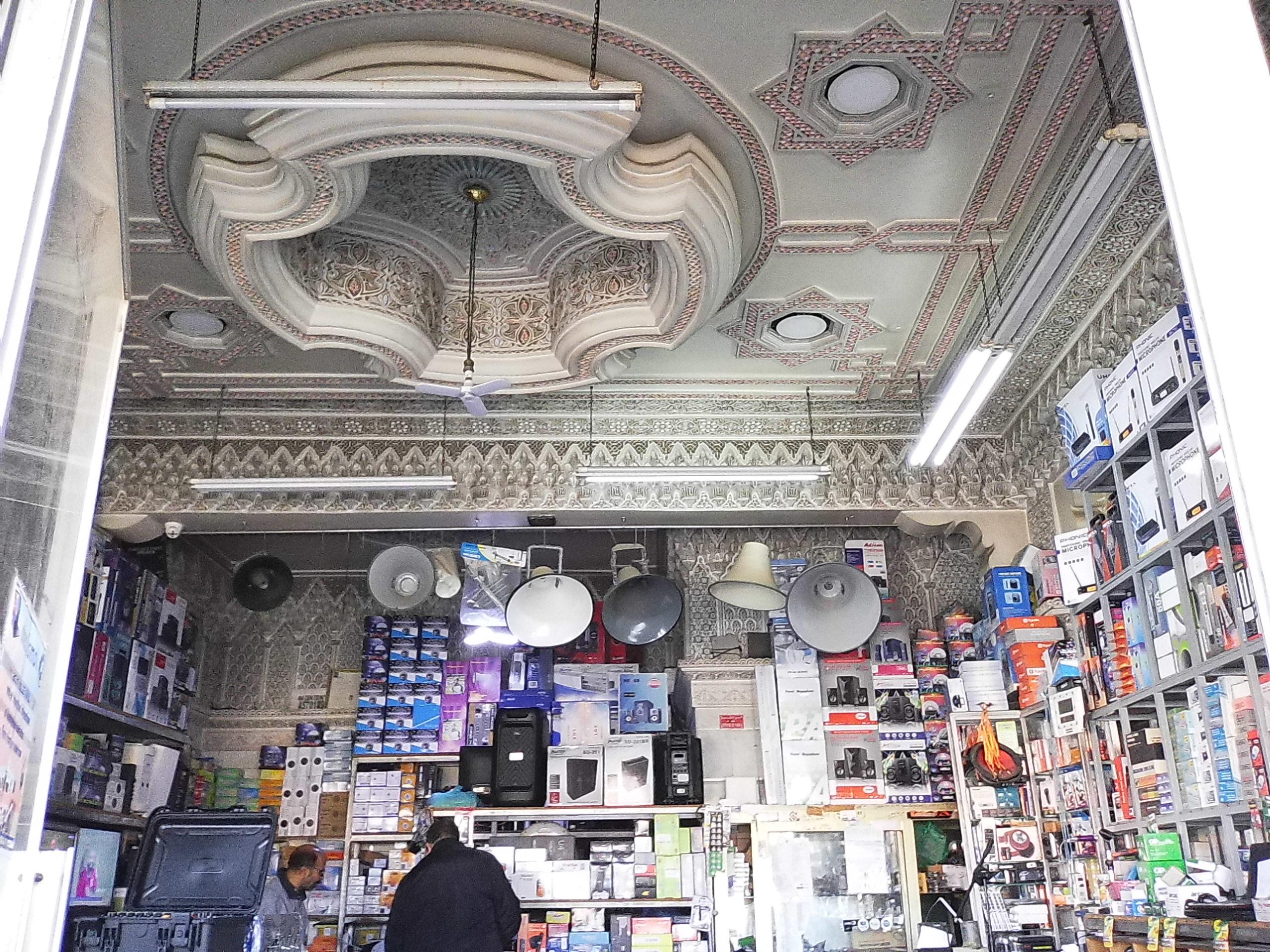
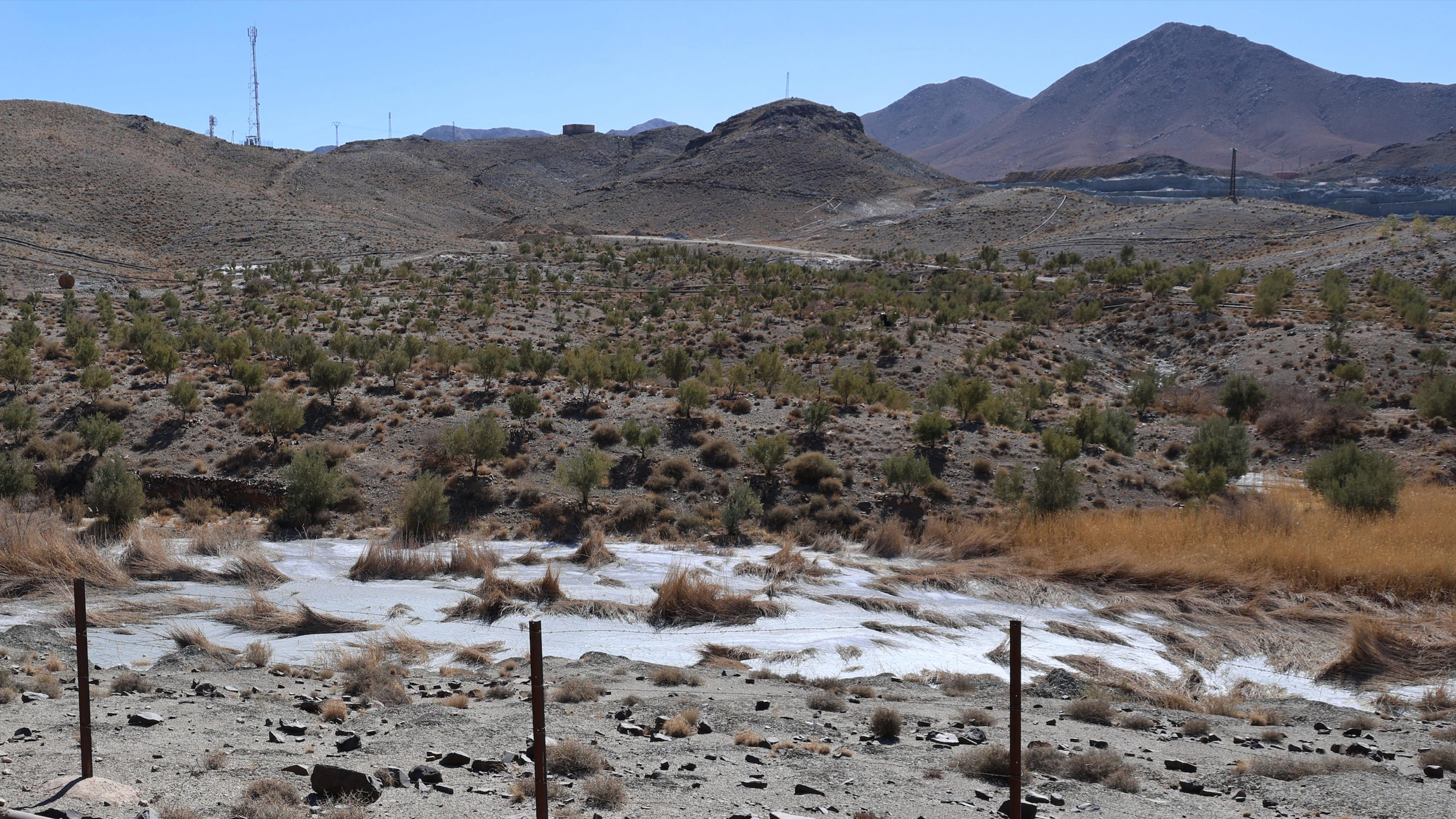
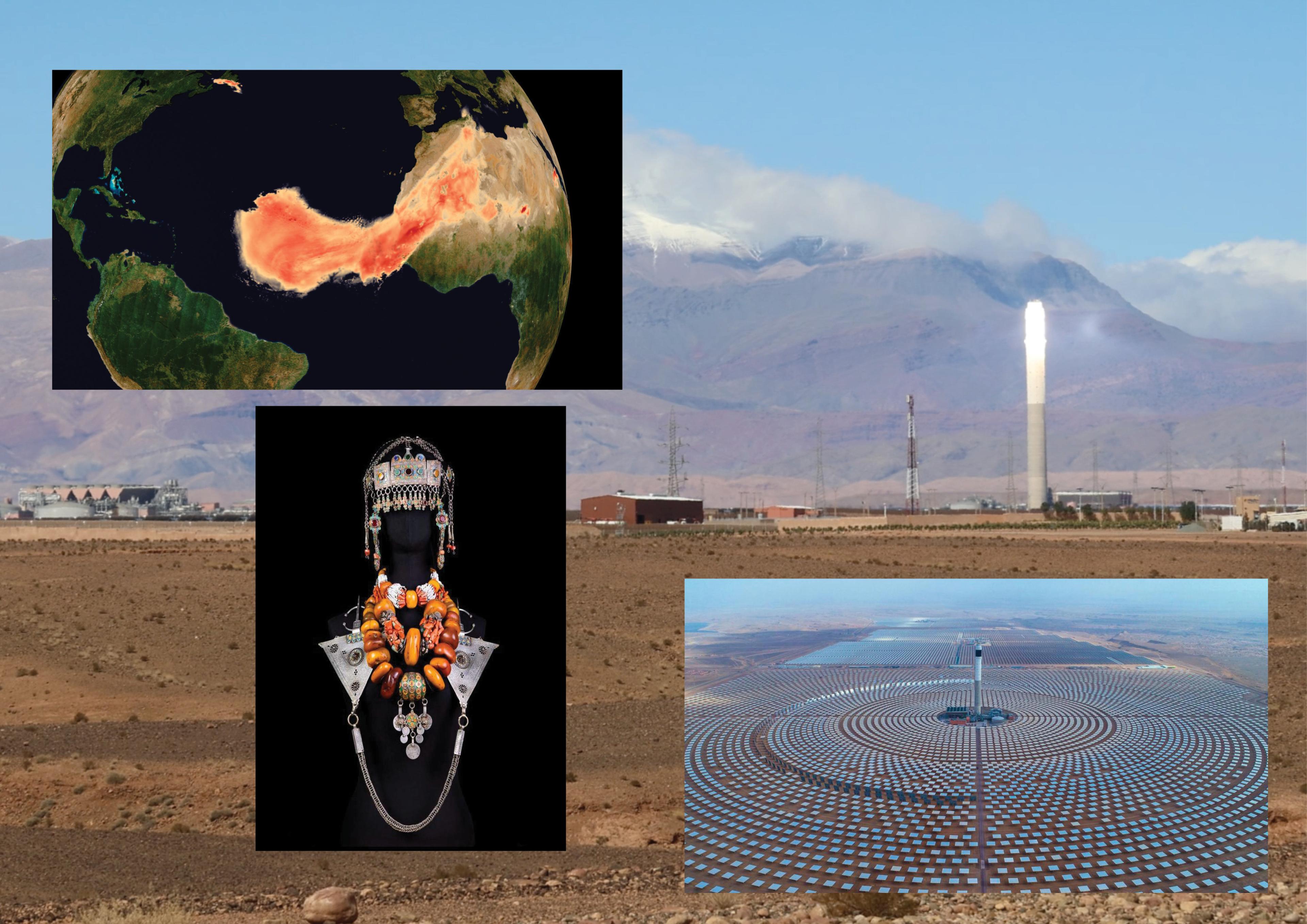
New Ecological Order. Image: Lesia Topolnyk

Research by

    • Lesia Topolnyk
    • Credits

Background of New Ecological Order

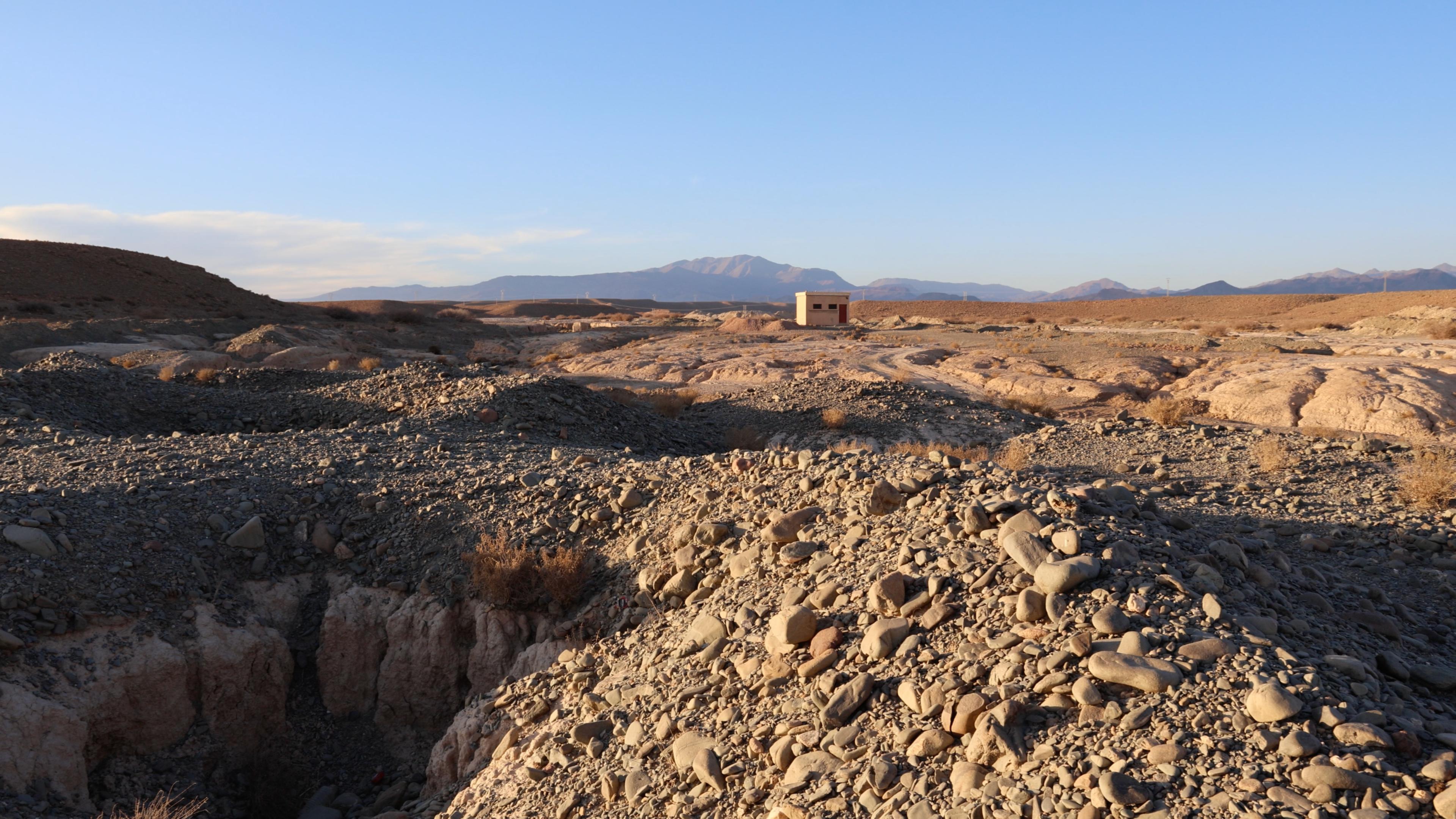
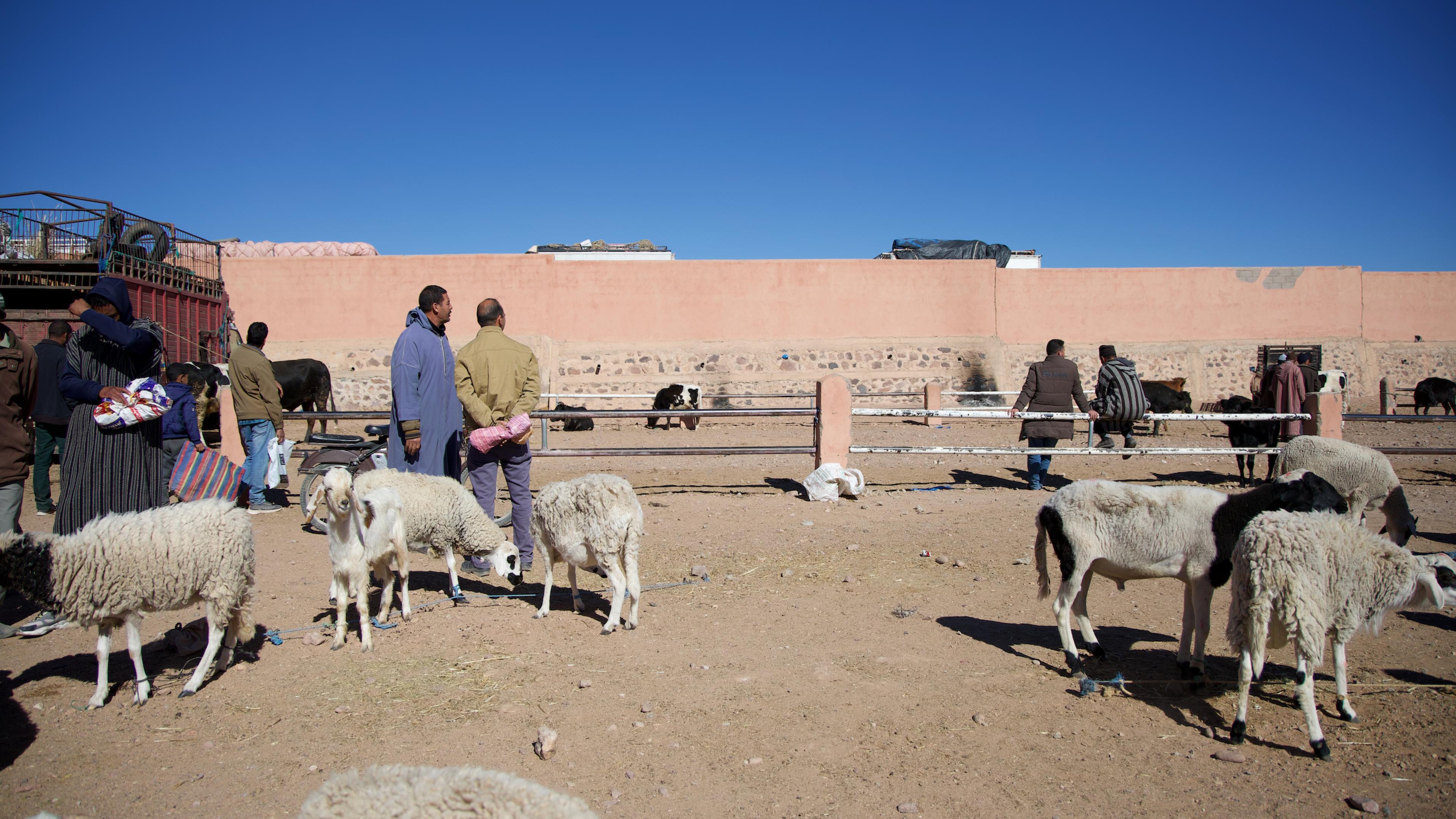
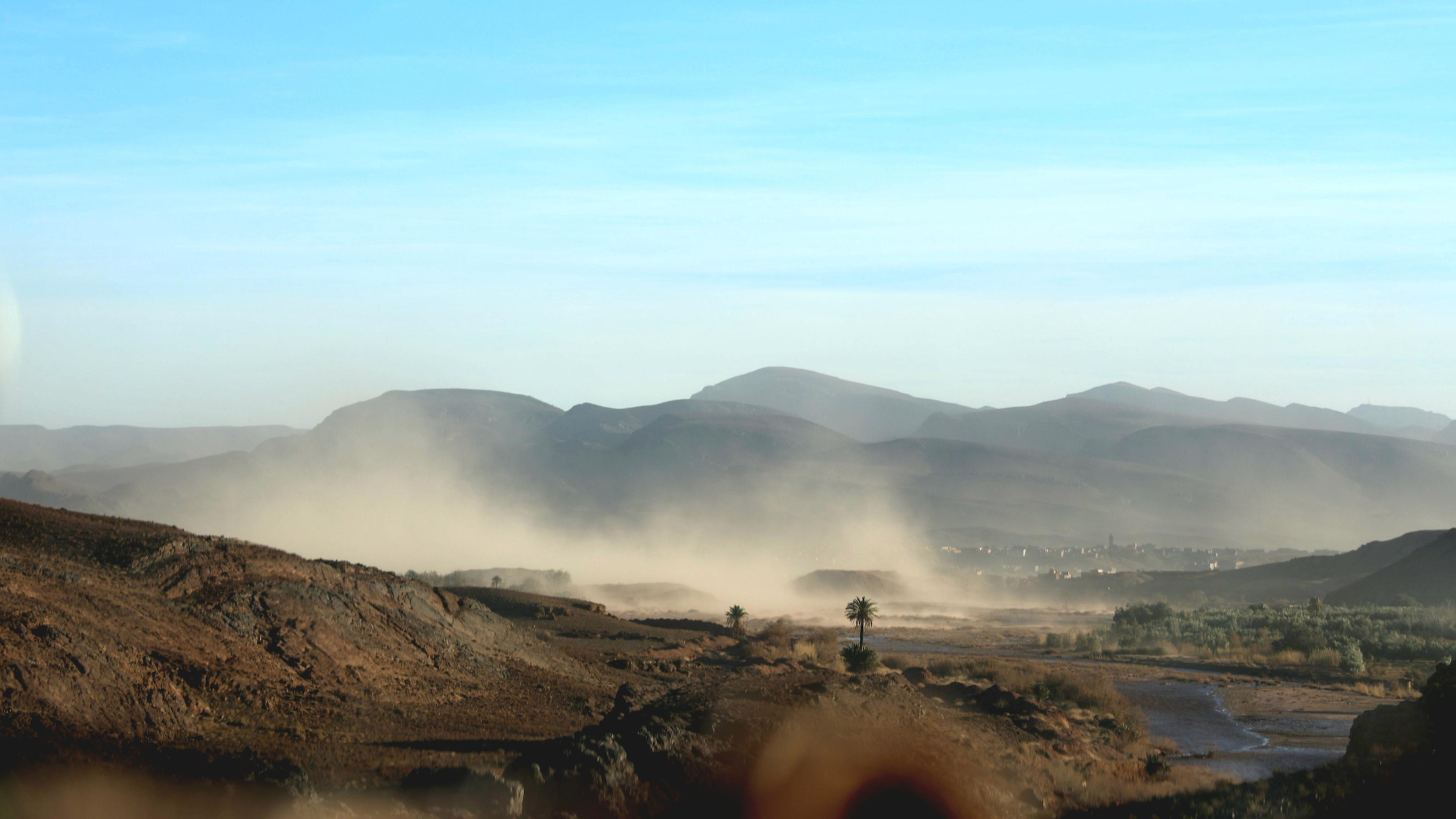
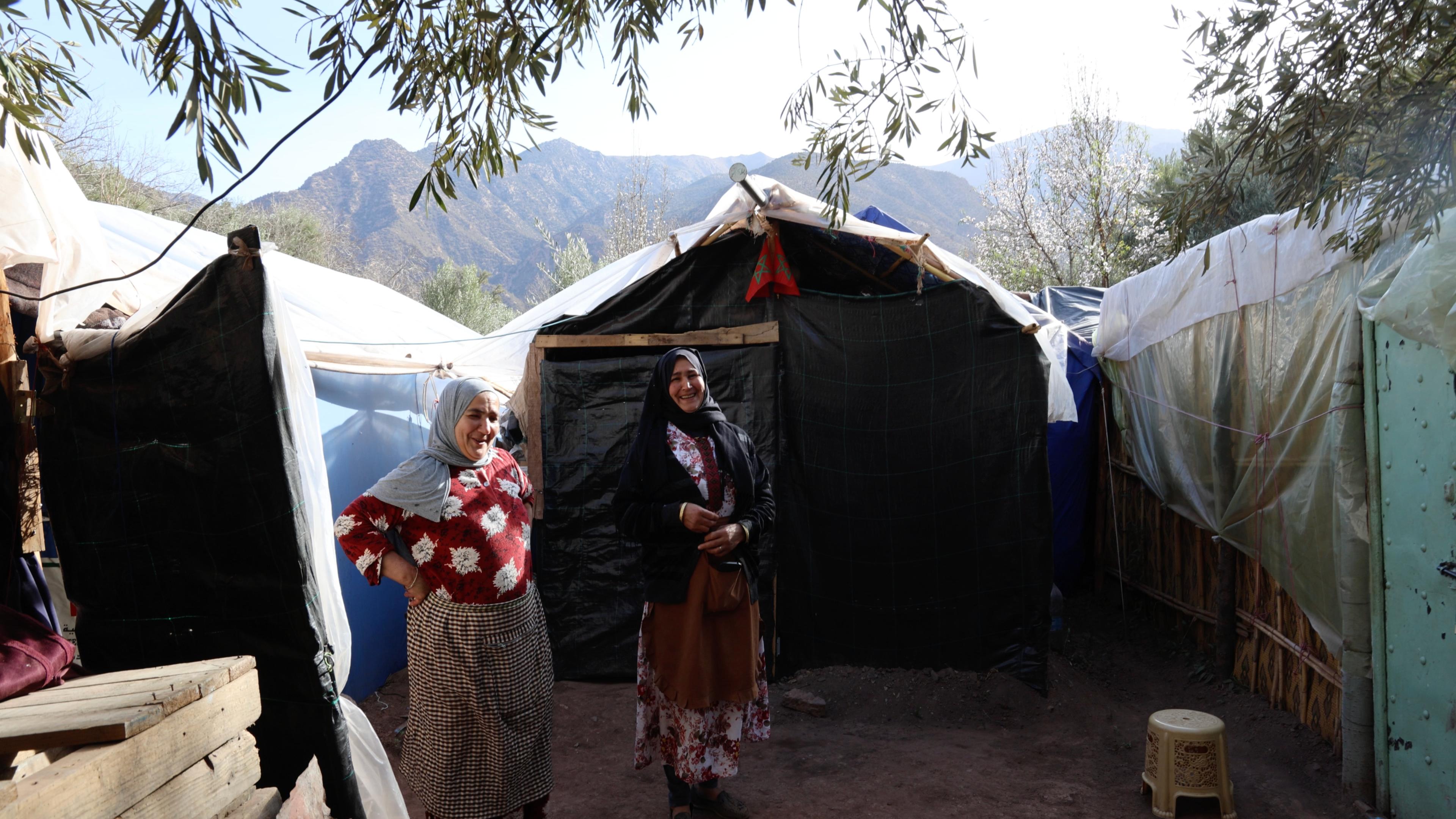
The project builds on the earlier research phase New Ecological Order, which examined the impacts of the European energy transition on Morocco’s Imazighen Indigenous communities, particularly in the Draa-Tafilalet region, home to the world’s largest concentrated solar power plant, the NOOR Ouarzazate Solar Complex. Approaching the energy transition from a cultural perspective, the research foregrounded Indigenous knowledge and forms of resilience often excluded from dominant sustainability narratives.

The current phase expands to Tangier, understood not only as a site of wind energy production but as a strategic hub for energy distribution to Europe and a territory undergoing rapid urban change driven by new industrial developments. Situating Morocco’s energy transition within broader urban–rural, geopolitical, and ecological dynamics, the project adopts a holistic approach, examining how energy infrastructure, mining, underground water systems, and urban growth collectively shape the physical and social realities of developing regions.

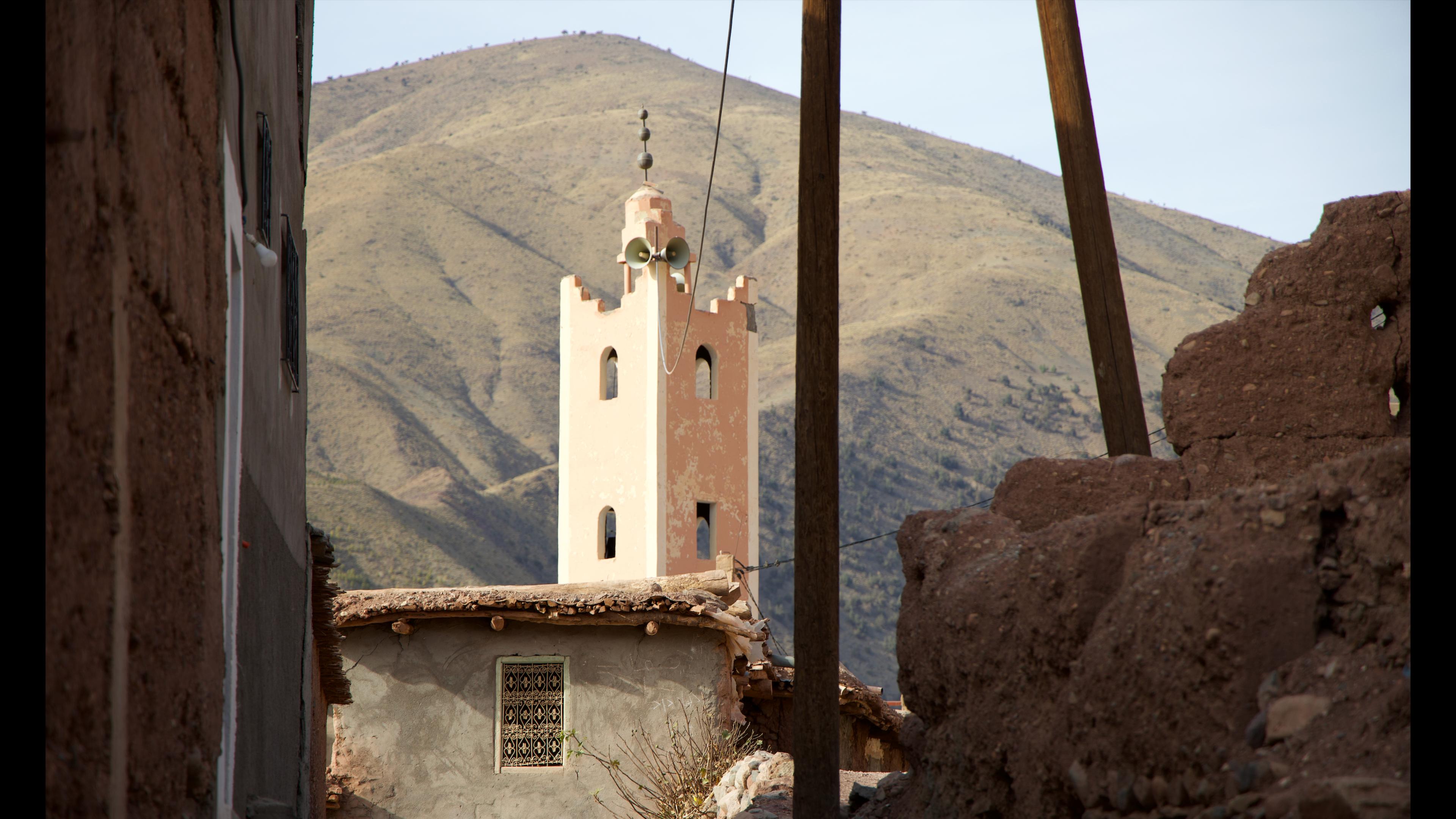
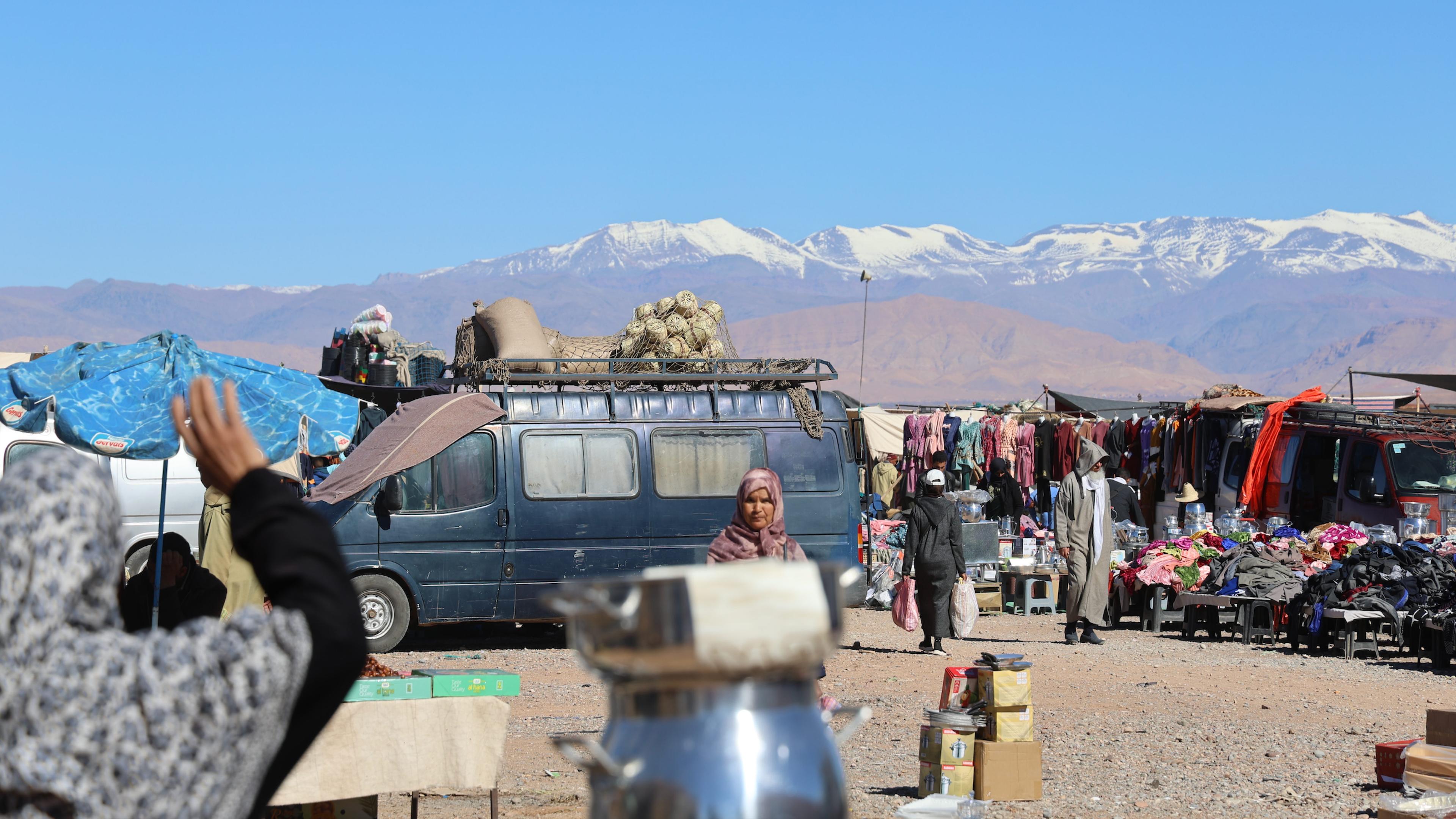
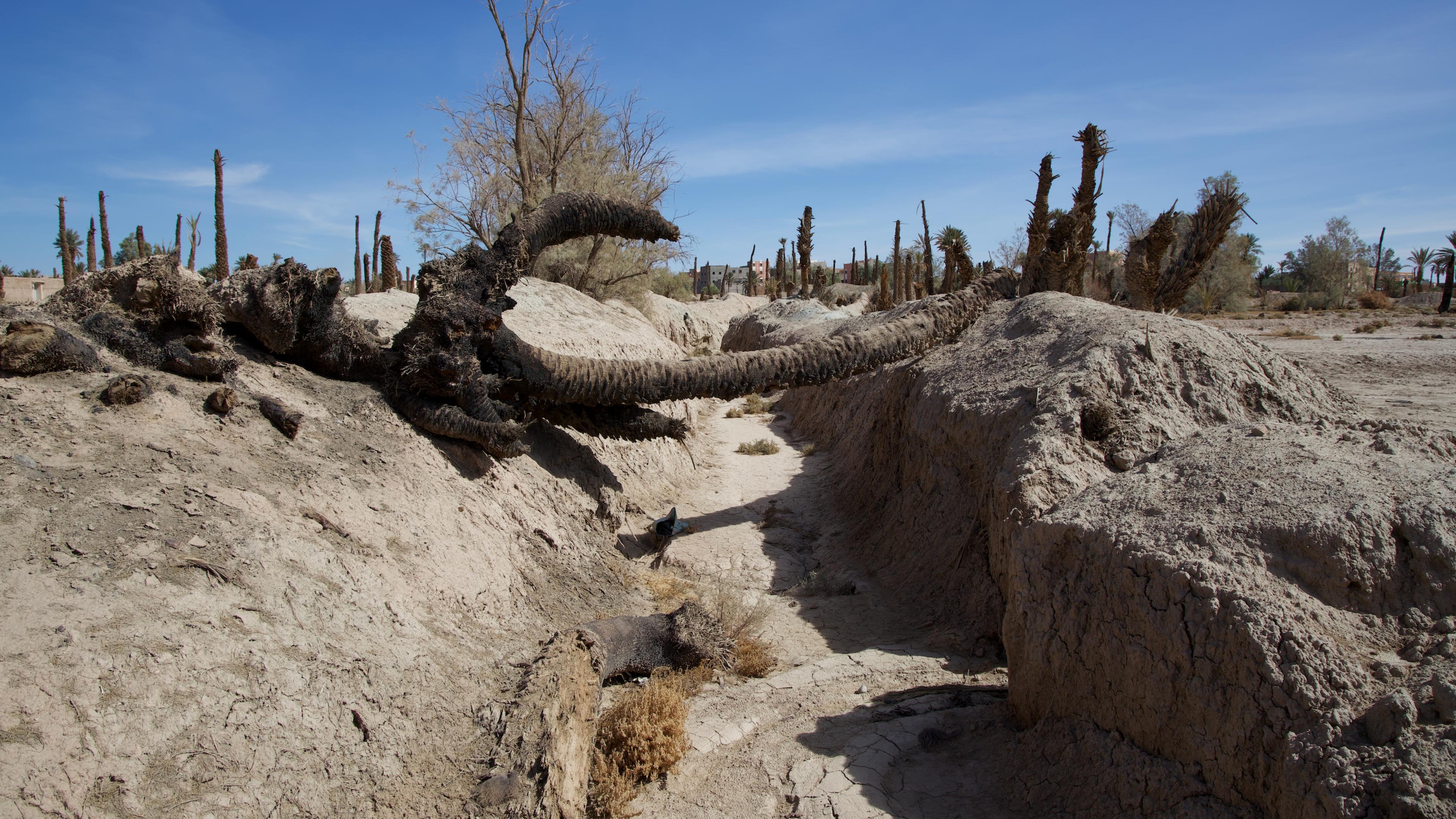
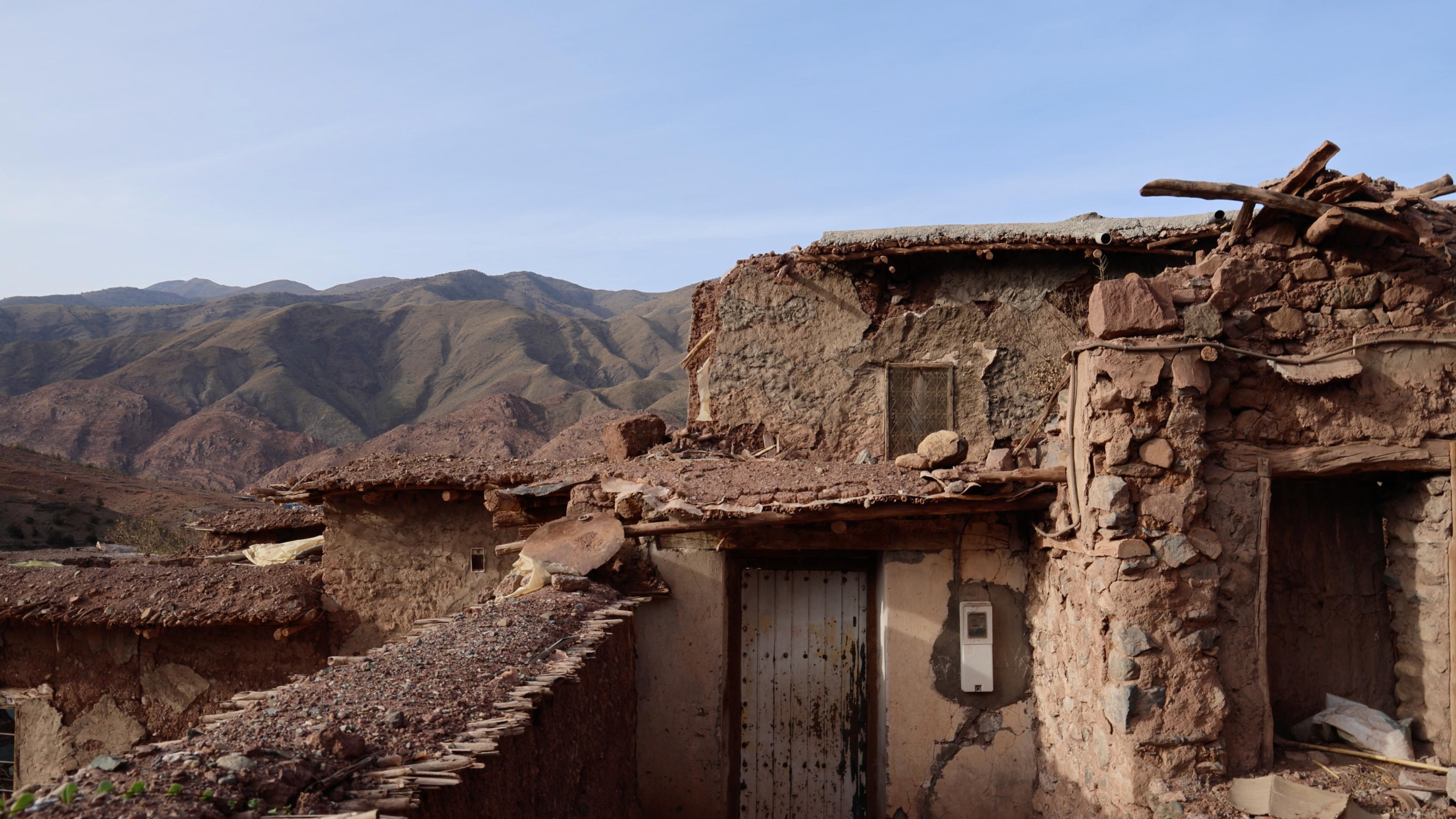
Morocco. Image: Lesia Topolnyk

What is the research method of New Ecological Order?

The research uses a multidisciplinary methodology rooted in participatory design, spatial forensics, and artistic research. It combines fieldwork, interviews, surveys, focus groups, and community workshops with architectural analysis and cultural investigation. Local communities are actively involved in knowledge production, ensuring that Indigenous perspectives and lived experiences shape the research outcomes. Artistic practices – such as spatial storytelling, installations, film, and material-based research – are used to translate complex sociopolitical issues into accessible forms. Digital storytelling and publications connect local findings to global audiences, allowing the research to function simultaneously as critique, documentation, and proposition for more just and inclusive energy transition frameworks.

What do we aim to achieve with New Ecological Order?

The research aims to expose the hidden social, ecological, and political costs of large-scale renewable energy projects in Morocco and to challenge dominant narratives of green progress. It seeks to amplify Indigenous voices, document local forms of resistance and resilience, and reconnect urban and rural realities shaped by energy infrastructure. By bridging local knowledge with global discourse, the project aspires to influence decolonized frameworks for energy transition that prioritize socioenvironmental justice.

Outcomes include public awareness, policy-relevant insights, and cultural productions – videos, exhibitions, site-specific interventions, and publications – that make systemic inequalities visible. Ultimately, the research aims to influence how future energy transitions are conceived, ensuring they are socially inclusive, culturally grounded, and ecologically responsible.

What are the results of New Ecological Order?

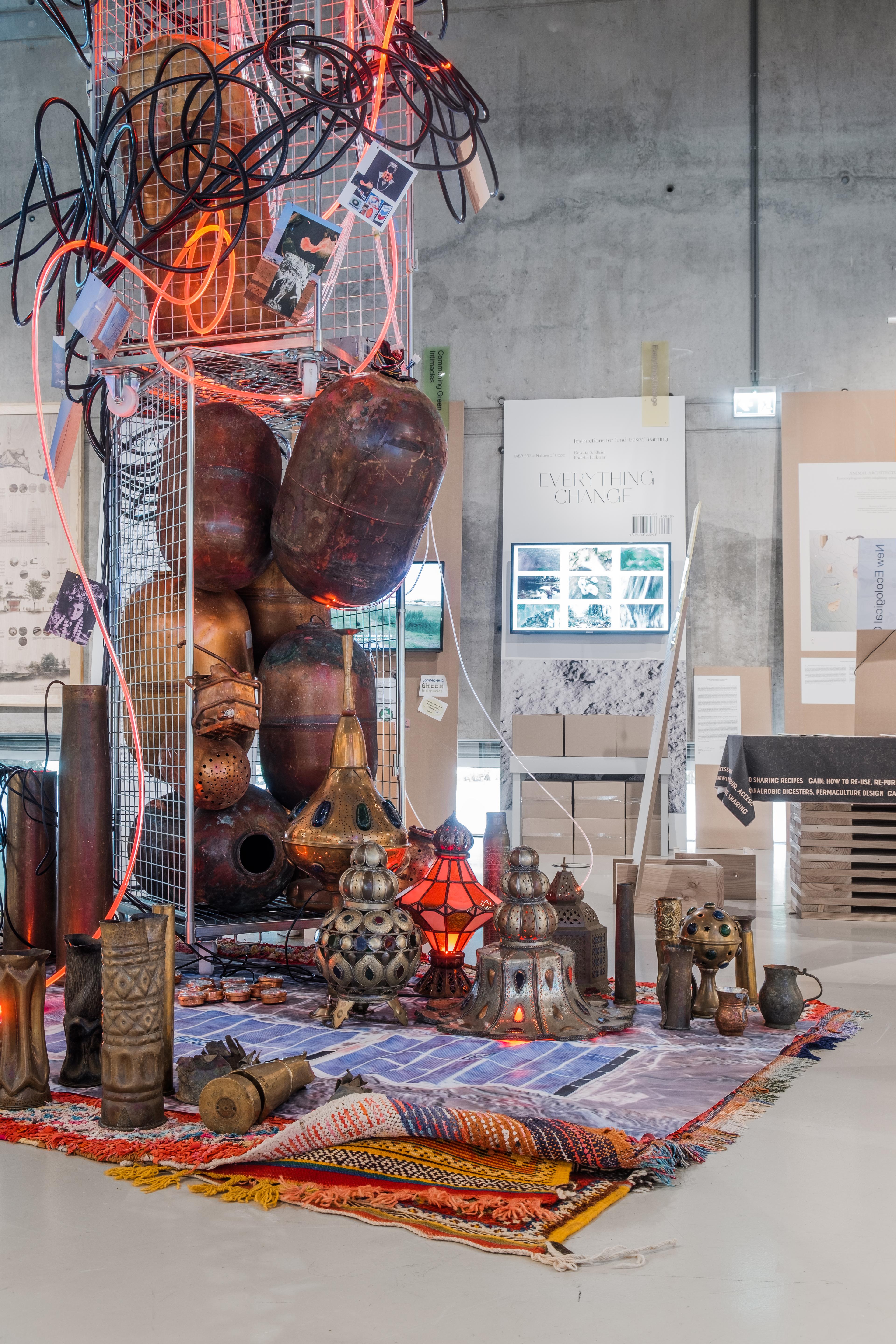
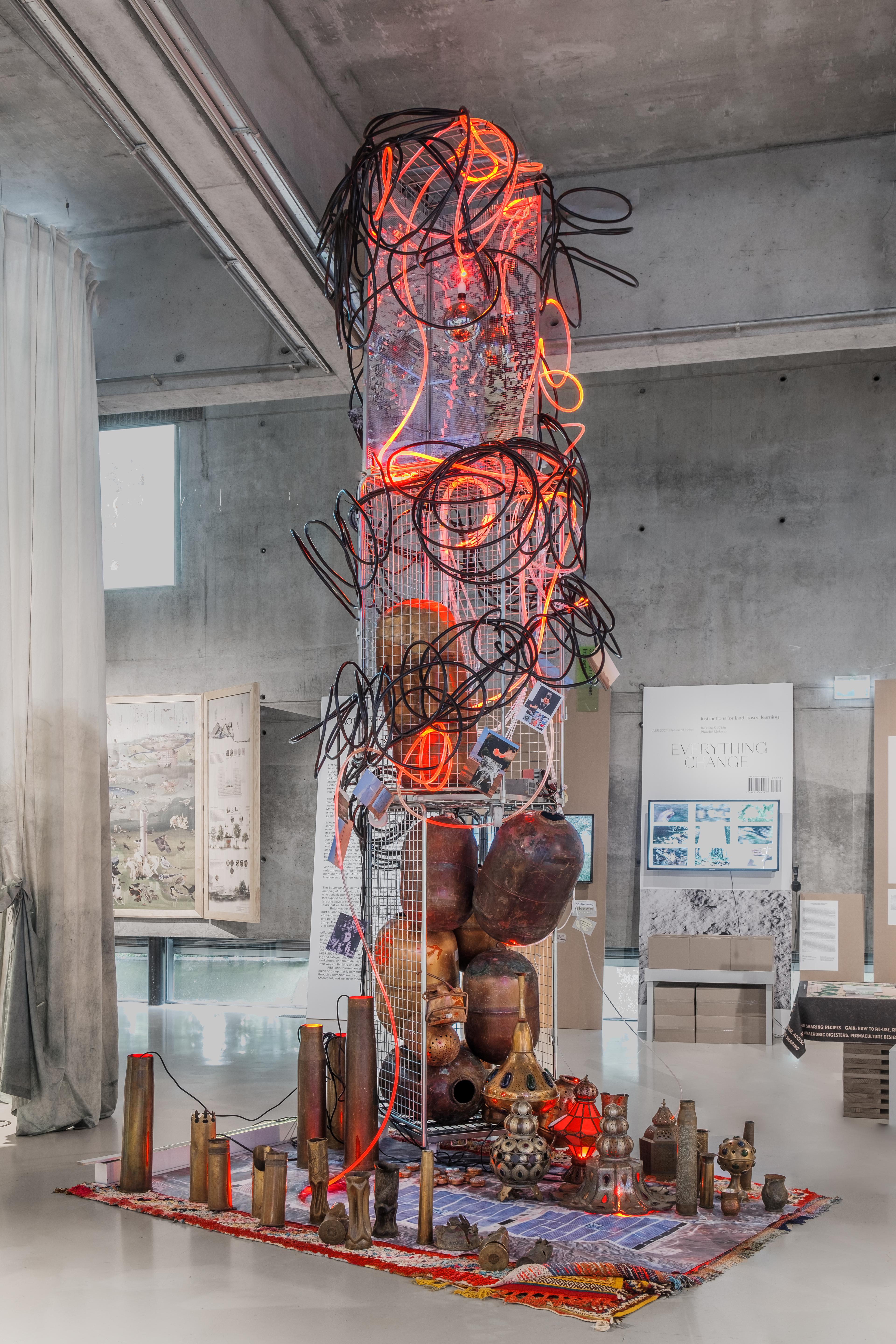
The results of the research have emerged gradually throughout the project’s phases and are expected to continue emerging progressively throughout 2026. Initial findings were developed following field research and community engagement in spring 2024, with preliminary outputs informing exhibitions and public events in late summer and autumn at the IABR. Progress materials – including a publication, short film, and exhibition – were presented in 2025 at MAGAZIN (Vienna). Final results are planned for 2026, with dissemination in both Morocco and Europe through platforms such as Think Tanger, MAKAN magazine, and international cultural institutions.

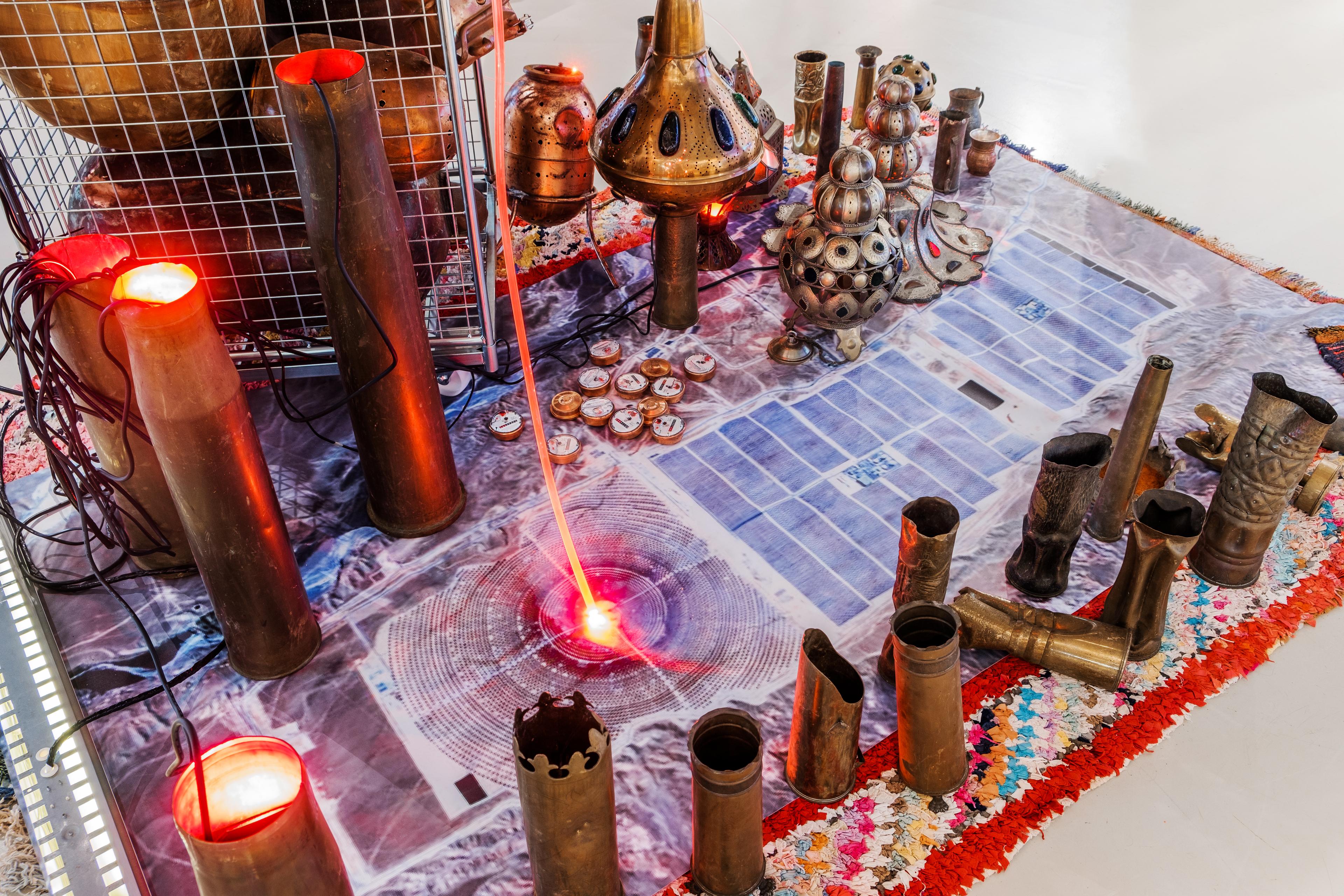
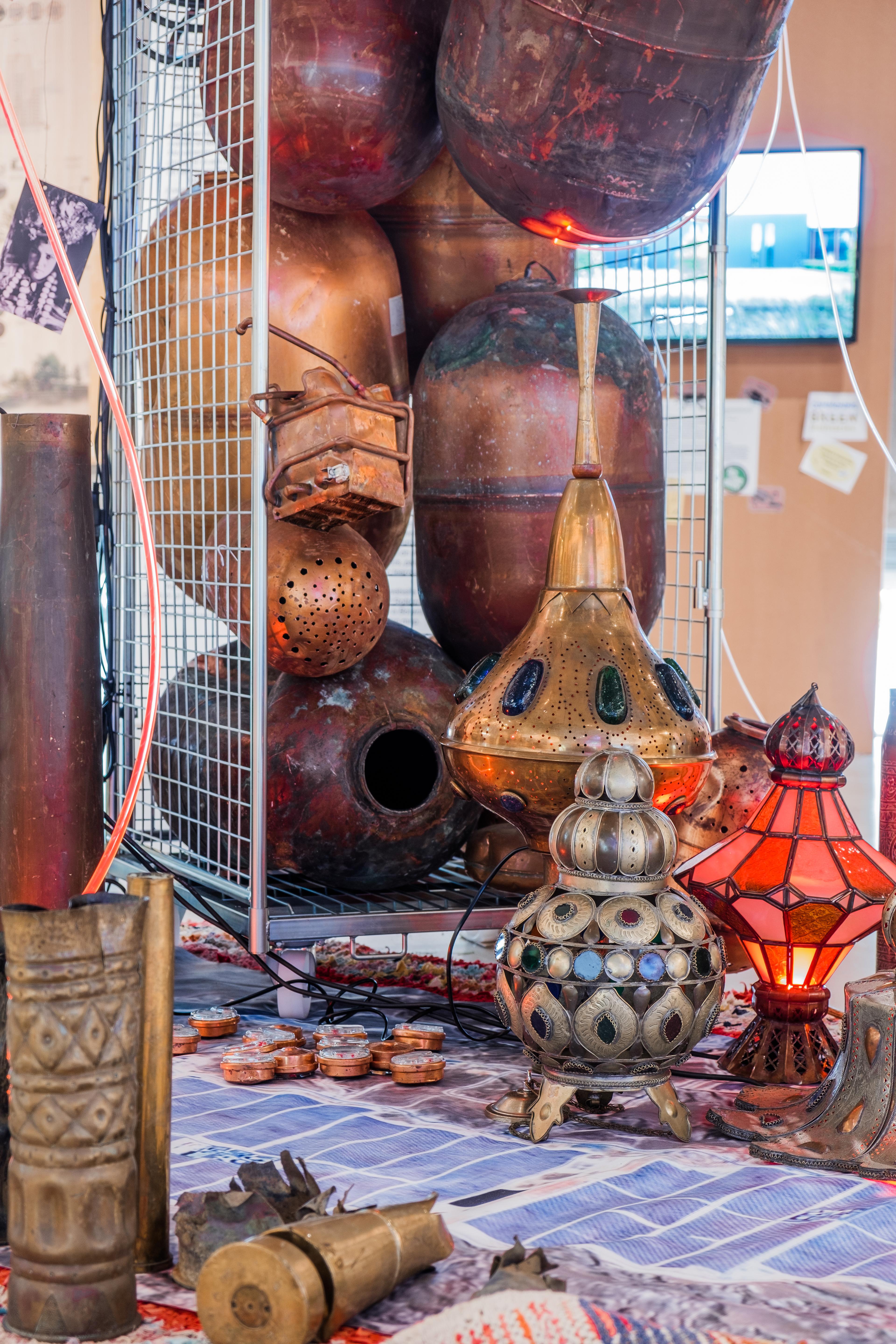
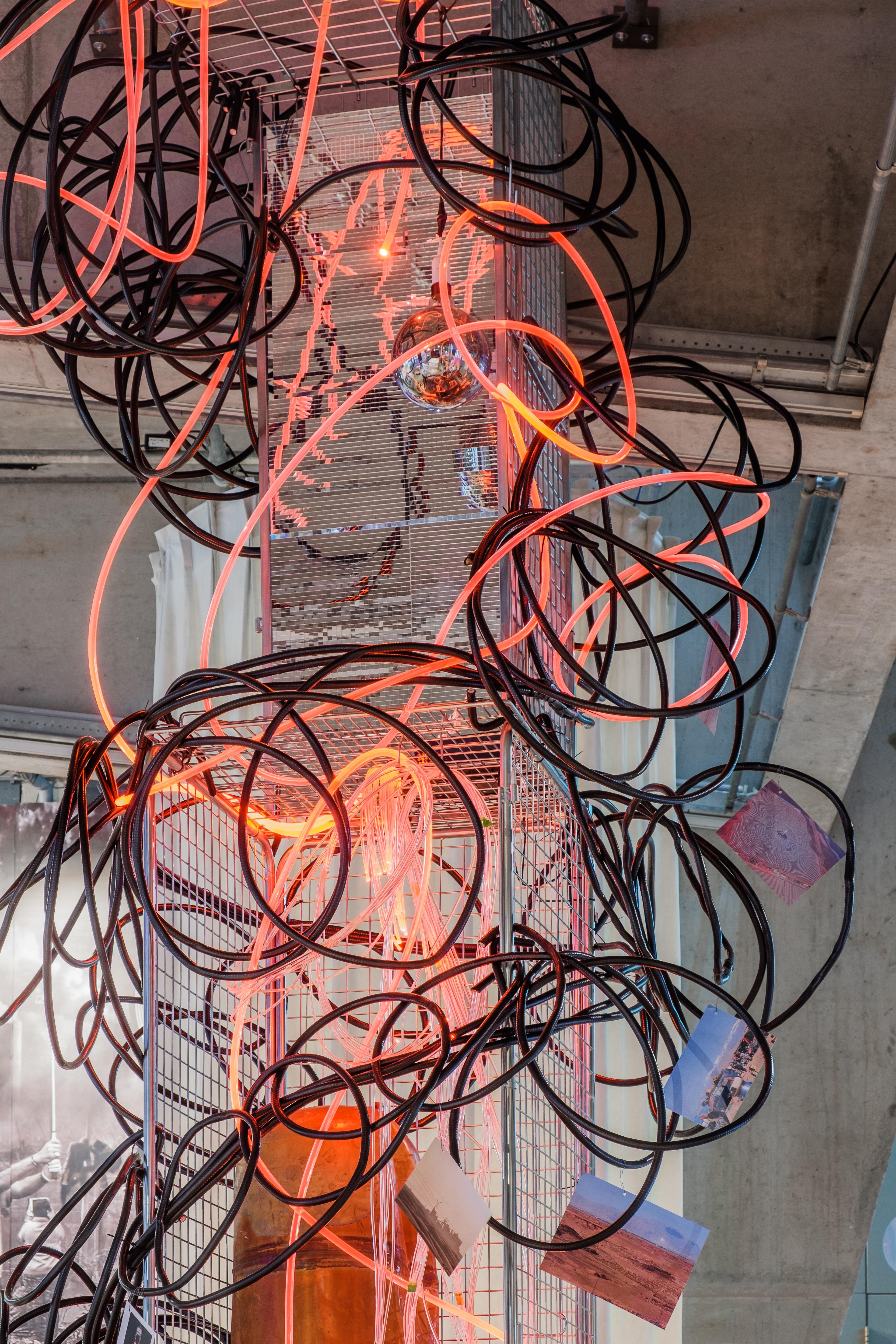
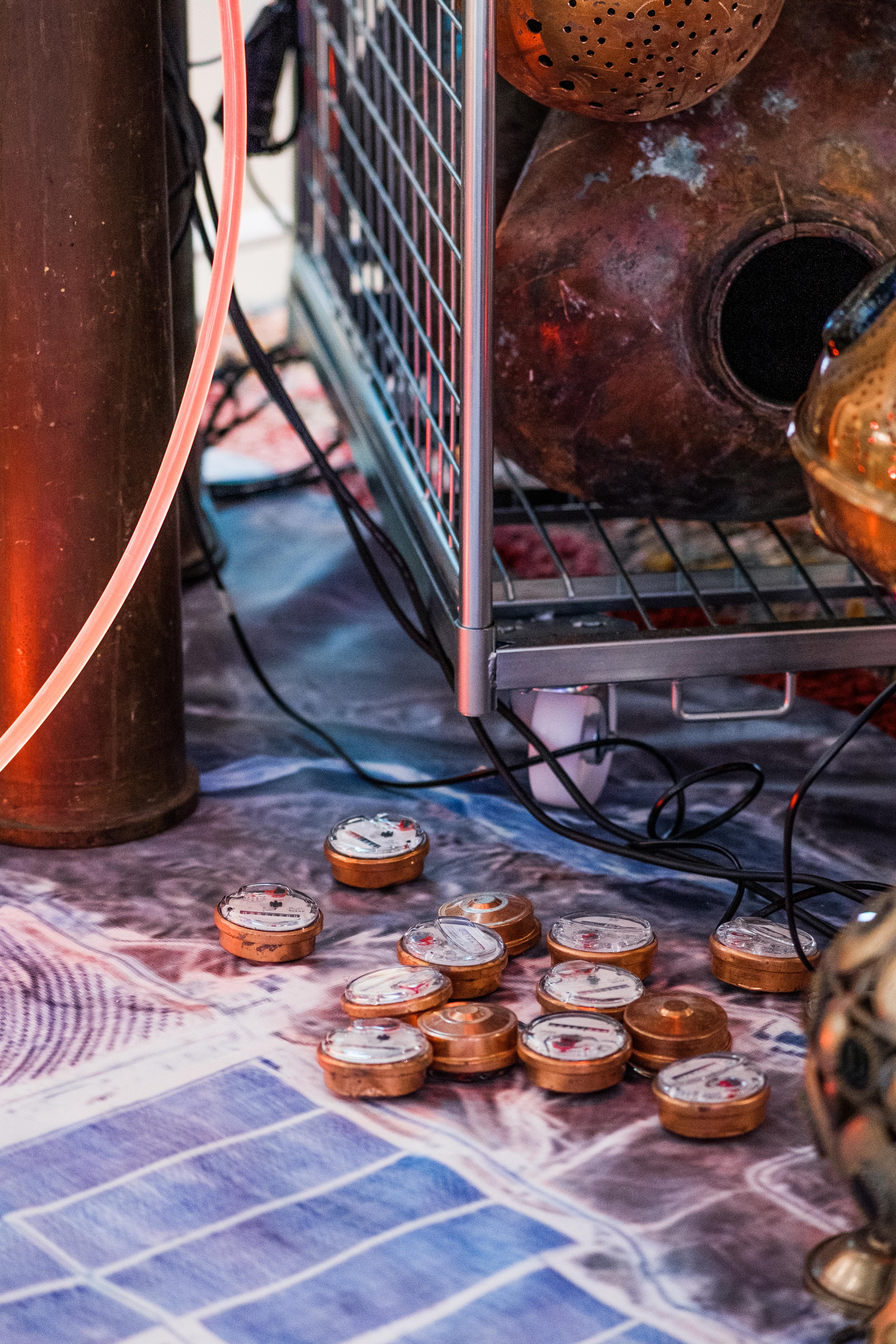
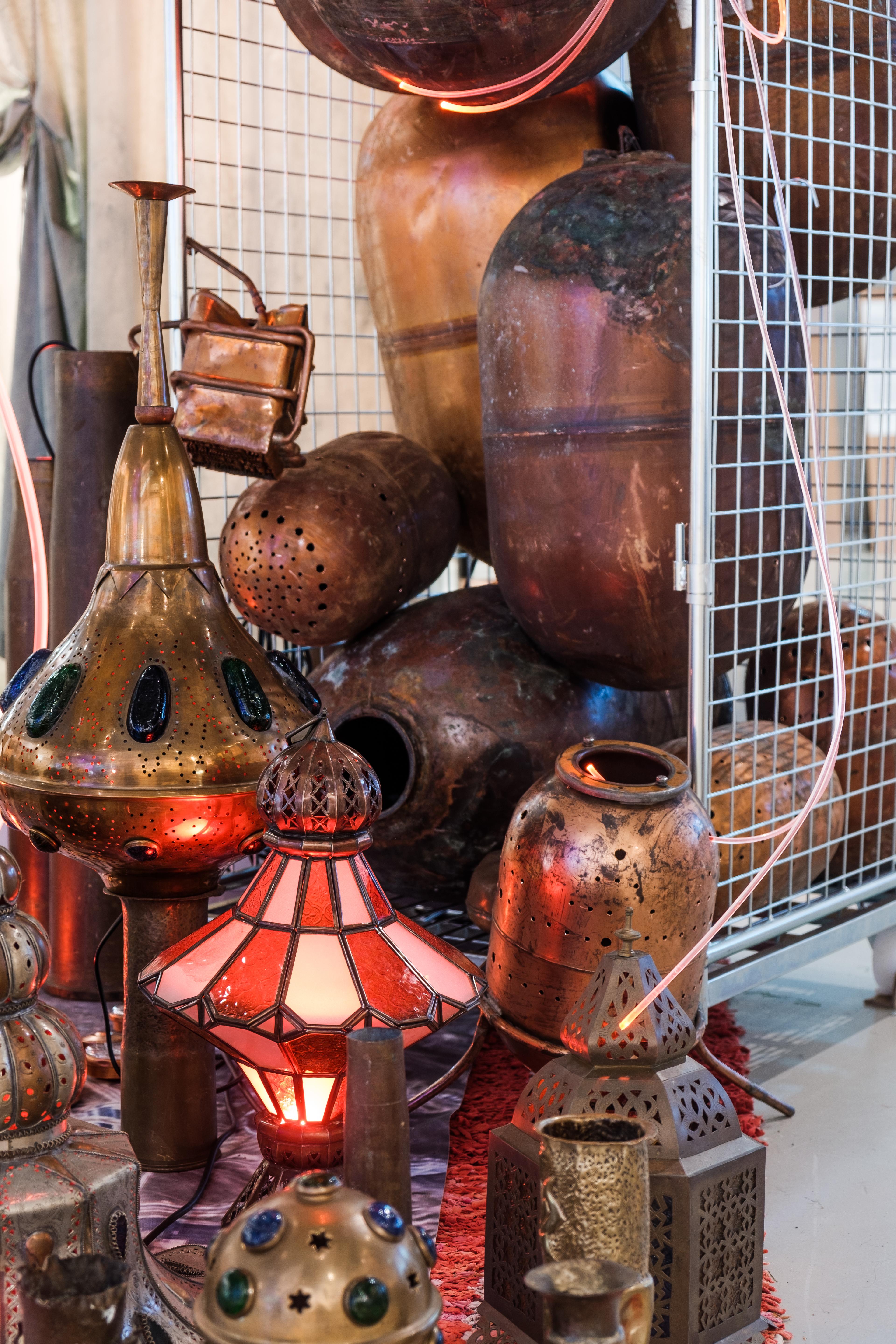
Installation IABR 2024 Nature of Hope. Image: Midas van Boekel